
Loading

Search
▼ BOJ Chief Ueda Signals Readiness For Further Rate Hikes
- Category:Other
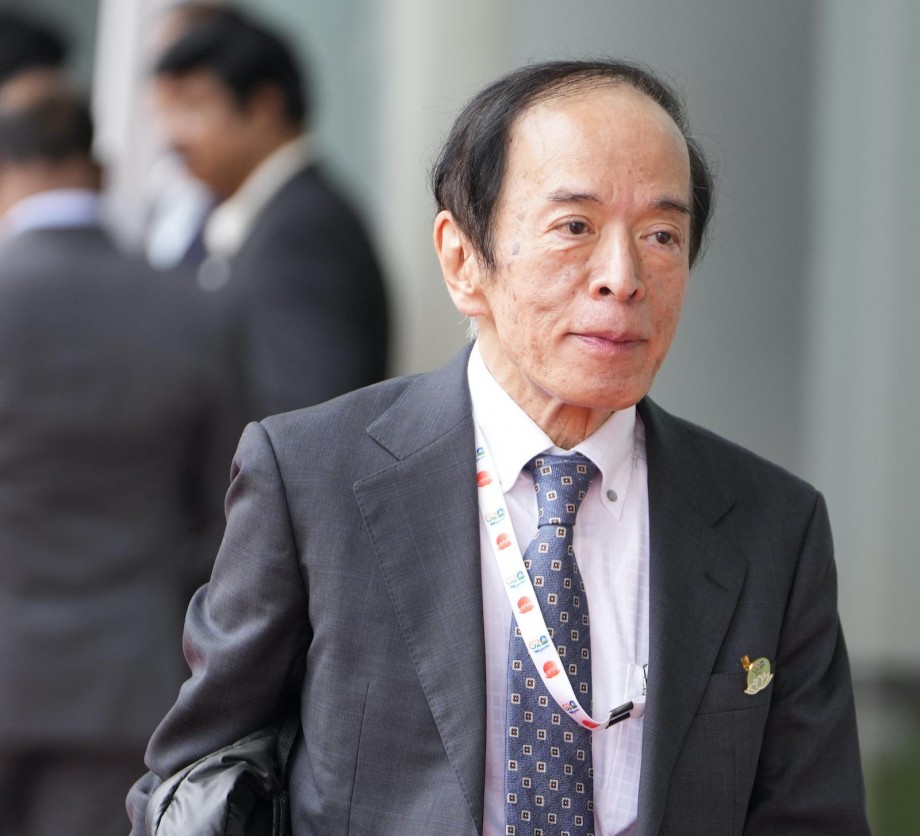
Bank of Japan Governor Kazuo Ueda on Thursday reiterated his readiness to continue raising interest rates from a 30-year high of around 0.75 percent, citing growing confidence in achieving the central bank's inflation target.
In a speech at a meeting of Japan's biggest business lobby in Tokyo, Ueda said the mechanism in which both wages and prices rise moderately -- a key factor affecting policy decisions -- will be maintained next year and beyond.
"Amid tightening labor market conditions, firms' wage- and price-setting behavior has changed significantly in recent years, and the achievement of the 2 percent price stability target, accompanied by wage increases, is steadily approaching," Ueda said at the event hosted by the Japan Business Federation, also known as Keidanren.
The speech came after the central bank last week raised its policy rate from around 0.5 percent to around 0.75 percent in a unanimous vote, and Ueda signaled possible further hikes depending on economic and price developments.
Ueda said Thursday that tight labor market conditions will boost the prospect of more pay hikes and inflation expectations have been heightening among households and companies.
Under such circumstances, the governor said the likelihood of Japan's economy returning to a "zero norm state," in which wages and prices hardly change, seems to have "decreased considerably."
Noting that real interest rates remain "at significantly low levels," Ueda said that if the bank's baseline scenario is realized, it will continue to raise the policy rate.
The bank expects underlying inflation, which strips away cost-push and other temporary factors, will be at a level consistent with its 2 percent target in the latter half of its three-year projection period until March 2028.
The BOJ faces the challenge of taking the policy rate to higher levels while carefully examining the effects of its gradual policy normalization after years of keeping borrowing costs depressed at rock-bottom levels to jolt the economy out of chronic deflation.
The governor said the central bank believes that adjusting the degree of monetary accommodation will support "long-term growth," thus providing confidence to businesses.
Ueda's latest remarks drew market attention after the yen weakened sharply against the U.S. dollar despite Friday's rate increase, a development that might otherwise have been expected to support the Japanese currency.
The initial market reaction to the speech was muted, with the dollar trading in the upper 155 yen range.
Since Prime Minister Sanae Takaichi took office in October, the yen has been under pressure amid concerns that her expansionary spending policy would further worsen Japan's fiscal health, triggering the selling of the currency and government bonds.
The yen's slide accelerated amid growing expectations that the BOJ would lift borrowing costs at a slower-than-expected pace, as Ueda offered no clear guidance on the timing or pace of future hikes in a press conference after the central bank's policy gathering, dealers said.
A weak yen is seen as a boon to Japanese exporters given that it inflates their profits made overseas when repatriated. But the negative side of yen depreciation has become more evident in recent years as resource-poor Japan has seen rising import costs hurting both businesses and consumers.
Takaichi's government is seeking to ramp up investment to make the economy stronger while easing the inflation pain felt by households.
Earlier on Thursday, a government advisory panel on economic and fiscal policy began discussions to draft a new policy blueprint, with Takaichi vowing increased fiscal spending but in a "responsible" way.
The blueprint, the first of its kind under Takaichi, is expected to be finalized around June, feeding into the compilation of the budget for fiscal 2027.
- December 26, 2025
- Comment (0)
- Trackback(0)