
Loading

Search
▼ Cargo, Investment Play Part In Japan's Space Industry In Global Race
- Category:Other
Japan, regarded as one of the most competitive players in the promising space business, needs to establish commercial cargo operations and narrow the scope of service areas eligible for government financial aid to better catch up with leading global rivals, analysts say.
Japan is among the first five countries to land a probe on the Moon and ranks third in public investment in the space sector, while a growing number of companies are seeking to offer services ranging from communications and in-orbit servicing to space travel.
But Japanese service providers still rely on U.S. companies such as Space Exploration Technologies Corp, known as SpaceX, and Rocket Lab Corp for transportation, which is considered a fundamental service for the entire space business.
Japanese commercial cargo servicers are still in development or trial phases. Rocket launches from Japan will be vital for transporting cargoes at lower cost and with shorter lead times, analysts say.
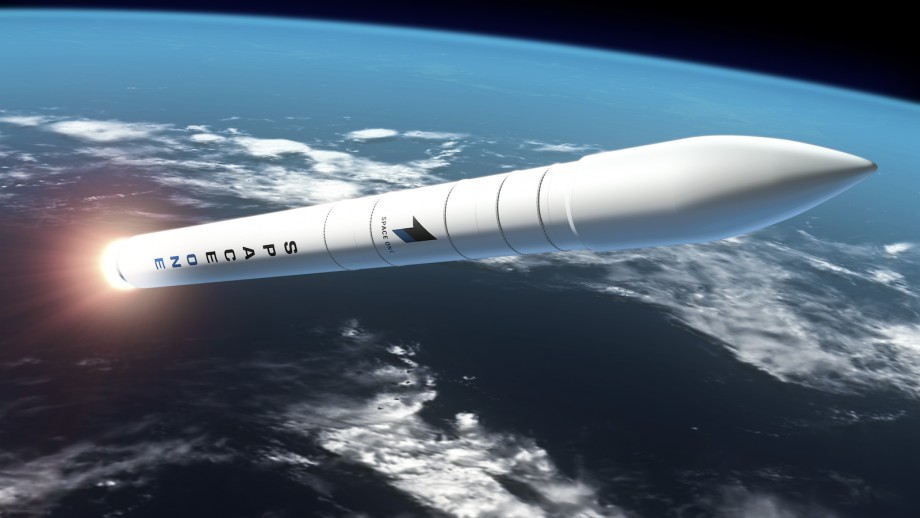
Aside from the Japan Aerospace Exploration Agency's H3 rocket, space venture Interstellar Technologies Inc. and startup Space One Co are among the frontrunners in developing private rockets, while Honda Motor Co has also joined the fray from the auto industry.
Honda's research arm successfully launched and landed an experimental reusable rocket that reached nearly 300 meters during a test flight in Hokkaido in June.
The automaker says no decision has been made on its future rocket business but aims for a suborbital launch by 2029.
"We are working on research to see if there is anything we can do to contribute to people's lives, at a time when supply and demand for space transportation vehicles is tight," said Kazuo Sakurahara, general manager at Honda R&D Co.'s Space Strategy Office.
Hidetaka Aoki, a space business consultant who calls himself a "space evangelist," said if rockets become available in Japan, the space business will gather momentum.
"I think this is a matter of time and could be realized in a few years," he said.
The Japanese government supports the industry through the Space Strategy Fund and plans to pump 1 trillion yen ($6.5 billion) into the market over the 10 years through March 2035. But its financial assistance pales in comparison with that of leading countries, analysts say.
"The scale of (Japan's) funding and state budget regarding the space industry is far behind the United States...The gap is big," said Yosuke Enomoto, senior manager at PwC Consulting. "The ecosystem of startups is also immature, leading to a substantial difference in the amount they can raise in Japan."
In 2024, Japan invested $6.8 billion in the space industry, the third largest among governments' spending in the sector. But it was far behind the United States' $79.7 billion and China's $19.9 billion, according to France-based space consulting firm Novaspace.
PwC's Enomoto said the Japanese government could consider focusing on specific areas to make better use of its budget.
"The space strategy fund works to expand players in the space industry, but on the flip side, it also spreads fund allocations," Enomoto said.
JAXA and major companies such as Mitsubishi Heavy Industries Ltd and NEC Corp have long led the industry, while startup firms have joined the fray in recent years, widening the range of services in the business.
The government is providing support with a goal of doubling the market value to 8 trillion yen by the early 2030s from 2020.
Companies are also making their own efforts to raise funds.
In August 2025, Axelspace Corp, which provides solutions using data collected from its microsatellites, went public on the Tokyo Stock Exchange's Growth Market.
Among others, iSpace Inc., seeking to become Asia's first private firm to land a rover on the Moon, Astroscale Holdings Inc, which specializes in removing space debris, and iQPS Inc and Synspective Inc, both providers of high-resolution images from synthetic aperture radar satellites, have listed on the bourse for emerging companies in recent years.
Even so, analysts say the fundraising market for startups in Japan is small compared with that of the U.S. and other markets.
For long-term growth, attracting foreign investment will be crucial, as government support can spark demand mainly from the public sector in defense and research.
"The space strategy fund is essentially to support research and development. It only serves to help the initial start," said Atsushi Uchida, chief research manager at Mitsubishi Research Institute.
"Making such a transition -- from the research and development stage to a business -- is an area Japanese companies and industries are weak at," he said.
Japan is among the first five countries to land a probe on the Moon and ranks third in public investment in the space sector, while a growing number of companies are seeking to offer services ranging from communications and in-orbit servicing to space travel.
But Japanese service providers still rely on U.S. companies such as Space Exploration Technologies Corp, known as SpaceX, and Rocket Lab Corp for transportation, which is considered a fundamental service for the entire space business.
Japanese commercial cargo servicers are still in development or trial phases. Rocket launches from Japan will be vital for transporting cargoes at lower cost and with shorter lead times, analysts say.
Aside from the Japan Aerospace Exploration Agency's H3 rocket, space venture Interstellar Technologies Inc. and startup Space One Co are among the frontrunners in developing private rockets, while Honda Motor Co has also joined the fray from the auto industry.
Honda's research arm successfully launched and landed an experimental reusable rocket that reached nearly 300 meters during a test flight in Hokkaido in June.
The automaker says no decision has been made on its future rocket business but aims for a suborbital launch by 2029.
"We are working on research to see if there is anything we can do to contribute to people's lives, at a time when supply and demand for space transportation vehicles is tight," said Kazuo Sakurahara, general manager at Honda R&D Co.'s Space Strategy Office.
Hidetaka Aoki, a space business consultant who calls himself a "space evangelist," said if rockets become available in Japan, the space business will gather momentum.
"I think this is a matter of time and could be realized in a few years," he said.
The Japanese government supports the industry through the Space Strategy Fund and plans to pump 1 trillion yen ($6.5 billion) into the market over the 10 years through March 2035. But its financial assistance pales in comparison with that of leading countries, analysts say.
"The scale of (Japan's) funding and state budget regarding the space industry is far behind the United States...The gap is big," said Yosuke Enomoto, senior manager at PwC Consulting. "The ecosystem of startups is also immature, leading to a substantial difference in the amount they can raise in Japan."
In 2024, Japan invested $6.8 billion in the space industry, the third largest among governments' spending in the sector. But it was far behind the United States' $79.7 billion and China's $19.9 billion, according to France-based space consulting firm Novaspace.
PwC's Enomoto said the Japanese government could consider focusing on specific areas to make better use of its budget.
"The space strategy fund works to expand players in the space industry, but on the flip side, it also spreads fund allocations," Enomoto said.
JAXA and major companies such as Mitsubishi Heavy Industries Ltd and NEC Corp have long led the industry, while startup firms have joined the fray in recent years, widening the range of services in the business.
The government is providing support with a goal of doubling the market value to 8 trillion yen by the early 2030s from 2020.
Companies are also making their own efforts to raise funds.
In August 2025, Axelspace Corp, which provides solutions using data collected from its microsatellites, went public on the Tokyo Stock Exchange's Growth Market.
Among others, iSpace Inc., seeking to become Asia's first private firm to land a rover on the Moon, Astroscale Holdings Inc, which specializes in removing space debris, and iQPS Inc and Synspective Inc, both providers of high-resolution images from synthetic aperture radar satellites, have listed on the bourse for emerging companies in recent years.
Even so, analysts say the fundraising market for startups in Japan is small compared with that of the U.S. and other markets.
For long-term growth, attracting foreign investment will be crucial, as government support can spark demand mainly from the public sector in defense and research.
"The space strategy fund is essentially to support research and development. It only serves to help the initial start," said Atsushi Uchida, chief research manager at Mitsubishi Research Institute.
"Making such a transition -- from the research and development stage to a business -- is an area Japanese companies and industries are weak at," he said.
- January 9, 2026
- Comment (0)
- Trackback(0)