
Loading

Search
▼ FCEV Sales In Japan Fall 83% As Refuelling Stations Close
- Category:Driving
Japan's hydrogen car market is caught in a familiar spiral: fewer stations mean fewer buyers, which in turn makes fewer stations viable. By Stewart Burnett
Annual sales of fuel-cell electric vehicles (FCEVs) in Japan fell 83% between 2021 and 2025 to just 431 units, as a collapsing refuelling network leaves owners with diminishing options for topping up and deters new buyers entirely. Nikkei reports that the country now has just 149 hydrogen stations: around 10% fewer than five years ago and less than half the 320 the government had targeted.
Under a 15-kilometre access standard, roughly 90% of Japan qualifies as existing in a coverage gap, with more than 1,500 of the country’s municipalities having no charging station whatsoever. Roughly 70% of stations also close by 5PM—many do not even operate daily—limiting coverage to fewer than 10% of Japan’s population after 6PM even in Tokyo.
The economics driving the retreat are, unfortunately, self-reinforcing. Station operators told Nikkei that construction costs for a single station come in around JP¥500m (US$3.3m), while throughput remains far too low to cover ongoing staffing and maintenance costs.
One Tokyo operator, speaking off-the-record, said the daily use hovers around five fuel-cell buses per day, but the break-even threshold of ten buses or thirty passenger cars.
From April, government purchase subsidies for fuel-cell vehicles will be trimmed down to a maximum JP¥1.05m, reduced from JP¥1.5m.
Meanwhile, subsidies for battery-electric vehicles will increase by up to JP¥1.3m—a clear indication of shifting confidence from the Japanese government.
The divergence widens an already substantial price gap: Toyota’s Mirai starts at JP¥7.41m (US$48,000) and Honda’s CR-V e:FCEV at JP¥8.33m, compared with battery EVs available from around JP¥2m.
This squeeze is not confined to Japan: Austria’s OMV exited the hydrogen station business entirely in 2025, leaving the country without any publicly-operated infrastructure whatsoever.
The same year saw Germany’s H2 Mobility closing roughly 30% of its domestic network. The country’s largest truckmaker, Daimler Truck, also pushed series production of its next-generation fuel cell models into the 2030s from an originally-planned launch in 2027.
Similar developments have emerged among most global automakers previously interested in the segment. For example, Stellantis discontinued its fuel-cell light commercial vehicle programme citing no mid-term economic viability, while General Motors halted next-generation development and wound down its joint venture with Honda—ending shared production of the CR-V e:FCEV in 2026. Renault and Cummins have both made similar exits from passenger and electrolyser segments respectively.
Toyota and Hyundai remain the most committed major players in the passenger vehicle segment. Toyota President Koji Sato has argued that building a hydrogen value chain from production through to end-use is the precondition for any recovery, and the company plans to install hydrogen production equipment at its main Aichi factory in fiscal 2026.
The automaker has gone to lengths to reiterate its confidence in the flagging segment, despite a broader retreat.
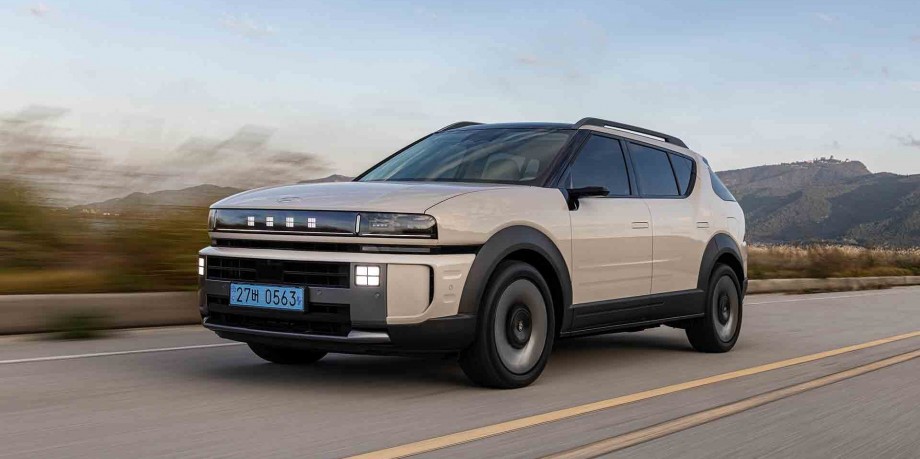
Hyundai, on the other hand, remains committed to launching its next-generation Nexo FCEV, offering a range of over 826 km and a fill time of just five minutes—making it essentially comparable to gasoline refuelling.
The vehicle will launch in Japan during the first half of 2026. BMW is targeting series production of a hydrogen iX5 SUV by 2028. Both Hyundai and Toyota revealed next-generation fuel cell technology in 2025.
Whether the automakers’ planned vehicles arrive in time to reverse the infrastructure retreat is the central question facing the technology, although it does appear unlikely.
For now, the market that was supposed to lead the world in accelerating hydrogen mobility is contracting faster than any intervention appears capable of reversing.
Annual sales of fuel-cell electric vehicles (FCEVs) in Japan fell 83% between 2021 and 2025 to just 431 units, as a collapsing refuelling network leaves owners with diminishing options for topping up and deters new buyers entirely. Nikkei reports that the country now has just 149 hydrogen stations: around 10% fewer than five years ago and less than half the 320 the government had targeted.
Under a 15-kilometre access standard, roughly 90% of Japan qualifies as existing in a coverage gap, with more than 1,500 of the country’s municipalities having no charging station whatsoever. Roughly 70% of stations also close by 5PM—many do not even operate daily—limiting coverage to fewer than 10% of Japan’s population after 6PM even in Tokyo.
The economics driving the retreat are, unfortunately, self-reinforcing. Station operators told Nikkei that construction costs for a single station come in around JP¥500m (US$3.3m), while throughput remains far too low to cover ongoing staffing and maintenance costs.
One Tokyo operator, speaking off-the-record, said the daily use hovers around five fuel-cell buses per day, but the break-even threshold of ten buses or thirty passenger cars.
From April, government purchase subsidies for fuel-cell vehicles will be trimmed down to a maximum JP¥1.05m, reduced from JP¥1.5m.
Meanwhile, subsidies for battery-electric vehicles will increase by up to JP¥1.3m—a clear indication of shifting confidence from the Japanese government.
The divergence widens an already substantial price gap: Toyota’s Mirai starts at JP¥7.41m (US$48,000) and Honda’s CR-V e:FCEV at JP¥8.33m, compared with battery EVs available from around JP¥2m.
This squeeze is not confined to Japan: Austria’s OMV exited the hydrogen station business entirely in 2025, leaving the country without any publicly-operated infrastructure whatsoever.
The same year saw Germany’s H2 Mobility closing roughly 30% of its domestic network. The country’s largest truckmaker, Daimler Truck, also pushed series production of its next-generation fuel cell models into the 2030s from an originally-planned launch in 2027.
Similar developments have emerged among most global automakers previously interested in the segment. For example, Stellantis discontinued its fuel-cell light commercial vehicle programme citing no mid-term economic viability, while General Motors halted next-generation development and wound down its joint venture with Honda—ending shared production of the CR-V e:FCEV in 2026. Renault and Cummins have both made similar exits from passenger and electrolyser segments respectively.
Toyota and Hyundai remain the most committed major players in the passenger vehicle segment. Toyota President Koji Sato has argued that building a hydrogen value chain from production through to end-use is the precondition for any recovery, and the company plans to install hydrogen production equipment at its main Aichi factory in fiscal 2026.
The automaker has gone to lengths to reiterate its confidence in the flagging segment, despite a broader retreat.
Hyundai, on the other hand, remains committed to launching its next-generation Nexo FCEV, offering a range of over 826 km and a fill time of just five minutes—making it essentially comparable to gasoline refuelling.
The vehicle will launch in Japan during the first half of 2026. BMW is targeting series production of a hydrogen iX5 SUV by 2028. Both Hyundai and Toyota revealed next-generation fuel cell technology in 2025.
Whether the automakers’ planned vehicles arrive in time to reverse the infrastructure retreat is the central question facing the technology, although it does appear unlikely.
For now, the market that was supposed to lead the world in accelerating hydrogen mobility is contracting faster than any intervention appears capable of reversing.
- February 19, 2026
- Comment (0)
- Trackback(0)