
Loading

Search
▼ Luggage Storage Services in Japan Diversify in Effort to Boost ‘Hands-free’ Tourism, Address Overtourism
- Category:Tourism
The number of foreign visitors to Japan is rising, and in response, luggage storage services are becoming more diversified, resulting in the growing popularity of “hands-free” sightseeing.
Multiple services are available in Ueno in Taito Ward, Tokyo, an area bustling with tourists.
Easing train crowding
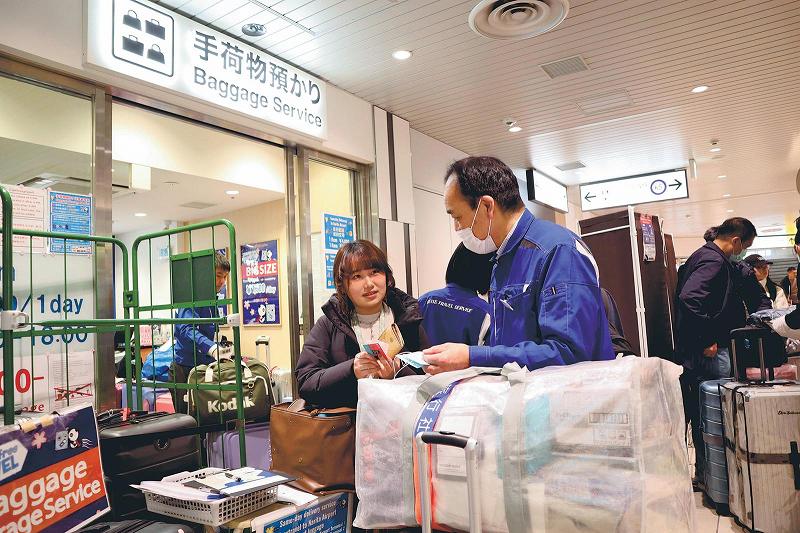
At 9 a.m. on a weekday in mid-February, foreign tourists could be seen pulling suitcases to the luggage storage facility outside the ticket gates at Keisei Electric Railway Co.’s Keisei Ueno Station. Narita Airport can be accessed directly from the station.
Staff members greet the tourists in English or Chinese, asking, “How many pieces of luggage?” After depositing their luggage at the facility, the foreign visitors thank the staff and disappear into the city.
The fee for storing a single suitcase is ¥1,000 per day. Just 2½ hours after opening, the facility had already taken in over 210 pieces of luggage, at which point a “FULL” sign was posted.
According to Chiba Prefecture-based operator Community Keisei Co., most customers store their luggage for a few hours or half a day.
Many use the service on travel days or the final day of their trip — when they may not be able to leave their luggage at their accommodation — and then go sightseeing in nearby areas like Ueno and Asakusa.
On the other hand, some people leave their luggage for up to two weeks or so while touring other cities.
On the day, a 34-year-old woman from Taiwan deposited her luggage for a four-day period. “I’m going to Nagano to see the snow,” she said.
The station also launched an airport luggage delivery service in January.
Luggage is accepted in the morning and delivered to Narita Airport by that evening, for a fee of ¥4,000 per suitcase. The aim of the service is to improve convenience for tourists and create more space on trains.
JR Ueno Station is expanding its luggage storage capacity by installing lockers at about 70 spots. Some of the lockers include a service in which the luggage can be delivered to hotels and other locations.
Hands-free sightseeing
Another service in the area allows users to search for and make reservations for nearby luggage storage spots online. Luggage is accepted by various shops registered with the service.
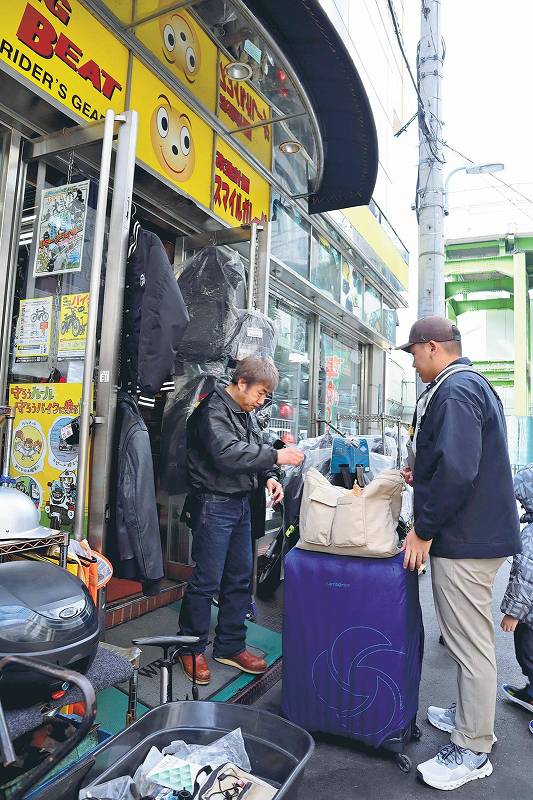
Big Beat Smile Garage, a motorcycle accessories shop in front of JR Ueno Station, stores luggage on its second floor. “Foreign customers come in looking puzzled, asking, ‘Do you take luggage here?’” said Takahiro Ishigami, who runs the shop.
Molek, a real estate company near the station, also registered with the service last year. They have prepared English guides regarding the service.
Shinichi Kudo, president of Tokyo-based ecbo, which operates the “ecbo cloak” storage service, said, “Stores can efficiently utilize spare space to generate income, and customers can store their luggage efficiently by making advance reservations.”
More than 2,500 locations nationwide, including hair salons and cafes, have signed up to the program. About 400 7-Eleven convenience stores across 26 prefectures joined the initiative in December.
By leaving large luggage behind, travelers can expand their range of activities. The benefits for tourist destinations are also significant.
In Taito Ward, four companies — including a luggage storage service provider and a travel planning app operator — jointly launched the “Machi Hop Project” last autumn. The project provides online luggage storage services and introduces spots that are best enjoyed hands-free.
“We want to alleviate the concentration of visitors at famous sites like Sensoji temple and spread the economic benefits of tourism to the surrounding areas,” said Takumi Sugahara, who conceived the project.
“We want foreign visitors to enjoy less well-known parts of Japan — such as small shrines and back-alley izakaya.”
Luggage takes up space in trains and buses, makes it more difficult to navigate narrow sidewalks and can make a clattering sound when on the move — all of which can contribute to overtourism.
“When overtourism occurs, foreign tourists become a source of irritation for local residents. Improving services such as luggage storage serves a dual purpose: creating economic value and solving social issues,” said Kazuo Takahashi, a professor of tourism marketing at Kindai University.
“It would be good to see the development of a nationwide system that promotes hands-free tourism, including collaboration between service providers.”
Multiple services are available in Ueno in Taito Ward, Tokyo, an area bustling with tourists.
Easing train crowding
At 9 a.m. on a weekday in mid-February, foreign tourists could be seen pulling suitcases to the luggage storage facility outside the ticket gates at Keisei Electric Railway Co.’s Keisei Ueno Station. Narita Airport can be accessed directly from the station.
Staff members greet the tourists in English or Chinese, asking, “How many pieces of luggage?” After depositing their luggage at the facility, the foreign visitors thank the staff and disappear into the city.
The fee for storing a single suitcase is ¥1,000 per day. Just 2½ hours after opening, the facility had already taken in over 210 pieces of luggage, at which point a “FULL” sign was posted.
According to Chiba Prefecture-based operator Community Keisei Co., most customers store their luggage for a few hours or half a day.
Many use the service on travel days or the final day of their trip — when they may not be able to leave their luggage at their accommodation — and then go sightseeing in nearby areas like Ueno and Asakusa.
On the other hand, some people leave their luggage for up to two weeks or so while touring other cities.
On the day, a 34-year-old woman from Taiwan deposited her luggage for a four-day period. “I’m going to Nagano to see the snow,” she said.
The station also launched an airport luggage delivery service in January.
Luggage is accepted in the morning and delivered to Narita Airport by that evening, for a fee of ¥4,000 per suitcase. The aim of the service is to improve convenience for tourists and create more space on trains.
JR Ueno Station is expanding its luggage storage capacity by installing lockers at about 70 spots. Some of the lockers include a service in which the luggage can be delivered to hotels and other locations.
Hands-free sightseeing
Another service in the area allows users to search for and make reservations for nearby luggage storage spots online. Luggage is accepted by various shops registered with the service.
Big Beat Smile Garage, a motorcycle accessories shop in front of JR Ueno Station, stores luggage on its second floor. “Foreign customers come in looking puzzled, asking, ‘Do you take luggage here?’” said Takahiro Ishigami, who runs the shop.
Molek, a real estate company near the station, also registered with the service last year. They have prepared English guides regarding the service.
Shinichi Kudo, president of Tokyo-based ecbo, which operates the “ecbo cloak” storage service, said, “Stores can efficiently utilize spare space to generate income, and customers can store their luggage efficiently by making advance reservations.”
More than 2,500 locations nationwide, including hair salons and cafes, have signed up to the program. About 400 7-Eleven convenience stores across 26 prefectures joined the initiative in December.
By leaving large luggage behind, travelers can expand their range of activities. The benefits for tourist destinations are also significant.
In Taito Ward, four companies — including a luggage storage service provider and a travel planning app operator — jointly launched the “Machi Hop Project” last autumn. The project provides online luggage storage services and introduces spots that are best enjoyed hands-free.
“We want to alleviate the concentration of visitors at famous sites like Sensoji temple and spread the economic benefits of tourism to the surrounding areas,” said Takumi Sugahara, who conceived the project.
“We want foreign visitors to enjoy less well-known parts of Japan — such as small shrines and back-alley izakaya.”
Luggage takes up space in trains and buses, makes it more difficult to navigate narrow sidewalks and can make a clattering sound when on the move — all of which can contribute to overtourism.
“When overtourism occurs, foreign tourists become a source of irritation for local residents. Improving services such as luggage storage serves a dual purpose: creating economic value and solving social issues,” said Kazuo Takahashi, a professor of tourism marketing at Kindai University.
“It would be good to see the development of a nationwide system that promotes hands-free tourism, including collaboration between service providers.”
Overseas examples
In Taiwan, Seoul and other overseas locations, services allowing tourists to check in their luggage for their flight before traveling to the airport have been introduced.
These services are available at major train stations connected to the airport. They enable travelers to enjoy their trip unencumbered until the very end, while also streamlining the journey to the airport and pre-boarding procedures.
The Land, Infrastructure, Transport and Tourism Ministry is conducting pilot projects in locations such as Osaka City, exploring the feasibility of implementing similar systems.
- March 26, 2026
- Comment (0)
- Trackback(0)