
Loading

Search
▼ Japan Annual Wage Talks Begin As Focus Turns To 5% Or Higher Pay Hike
- Category:Other
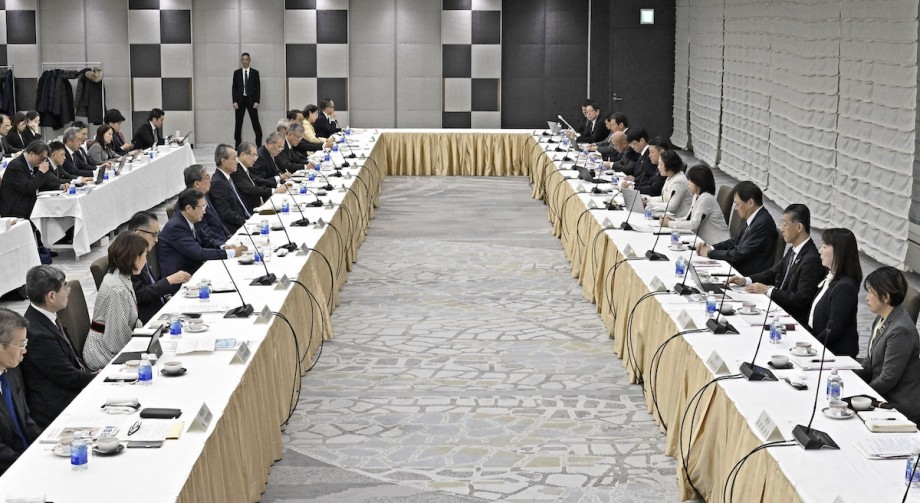
Japan's annual wage negotiations effectively kicked off on Tuesday, with the focus on whether the momentum for pay hikes will continue, reaching the rate of 5 percent or higher for the third straight year in the inflation-hit economy.
Yoshinobu Tsutsui, chairman of the country's most powerful business lobby, said in talks with Tomoko Yoshino, head of the largest labor union, "To further solidify the strong momentum of wage increases, we will exert leadership as our social duty."
Yoshino of the Japanese Trade Union Confederation, or Rengo, said, "We want to position the realization of a society where wage increases of 5 percent or more continue as a common foundation for negotiations."
The Japan Business Federation, known as Keidanren, is urging its member companies to offer base pay increases for this year's annual "shunto" labor-management negotiations ahead of April, when the new business year begins for many major corporations in the country.
Rengo has set an overall target of 5 percent or more for the third year, including for small and medium-sized companies.
In the 2025 negotiations, major Japanese firms raised wages by an average of 5.39 percent and 5.58 percent in 2024, according to the survey by Keidanren, up from 3.99 percent in 2023.
But for small and medium-sized companies, the increase remained at 4.73 percent on average, including 4.47 percent for those with 300 or more employees and 4.02 percent for those with 20 or fewer, according to the Japan Chamber of Commerce and Industry.
Wage negotiations at most large companies are expected to conclude by mid-March, with smaller firms completing theirs later.
The Bank of Japan, which raised its benchmark interest rate to the highest level since 1995 in December, is closely monitoring the outcome, as rises in both wages and prices are key factors affecting its policy decisions.
In its basic policy for the 2026 "shunto" wage talks, Rengo also encouraged unions representing small and medium-sized enterprises, -- which employ about 70 percent of the country's workforce -- to set higher goals of 6 percent or more, which would help to narrow the gap with larger companies.
Rengo has also said it aims for a real wage increase of 1 percent. Real, or inflation-adjusted, wages are a barometer of consumer purchasing power.
For November, government data showed Japan's real wages fell 2.8 percent from a year earlier, marking the 11th consecutive month of decline.
Yoshinobu Tsutsui, chairman of the country's most powerful business lobby, said in talks with Tomoko Yoshino, head of the largest labor union, "To further solidify the strong momentum of wage increases, we will exert leadership as our social duty."
Yoshino of the Japanese Trade Union Confederation, or Rengo, said, "We want to position the realization of a society where wage increases of 5 percent or more continue as a common foundation for negotiations."
The Japan Business Federation, known as Keidanren, is urging its member companies to offer base pay increases for this year's annual "shunto" labor-management negotiations ahead of April, when the new business year begins for many major corporations in the country.
Rengo has set an overall target of 5 percent or more for the third year, including for small and medium-sized companies.
In the 2025 negotiations, major Japanese firms raised wages by an average of 5.39 percent and 5.58 percent in 2024, according to the survey by Keidanren, up from 3.99 percent in 2023.
But for small and medium-sized companies, the increase remained at 4.73 percent on average, including 4.47 percent for those with 300 or more employees and 4.02 percent for those with 20 or fewer, according to the Japan Chamber of Commerce and Industry.
Wage negotiations at most large companies are expected to conclude by mid-March, with smaller firms completing theirs later.
The Bank of Japan, which raised its benchmark interest rate to the highest level since 1995 in December, is closely monitoring the outcome, as rises in both wages and prices are key factors affecting its policy decisions.
In its basic policy for the 2026 "shunto" wage talks, Rengo also encouraged unions representing small and medium-sized enterprises, -- which employ about 70 percent of the country's workforce -- to set higher goals of 6 percent or more, which would help to narrow the gap with larger companies.
Rengo has also said it aims for a real wage increase of 1 percent. Real, or inflation-adjusted, wages are a barometer of consumer purchasing power.
For November, government data showed Japan's real wages fell 2.8 percent from a year earlier, marking the 11th consecutive month of decline.
- January 27, 2026
- Comment (0)
- Trackback(0)