
Loading

Search
▼ Japanese Craft Breweries Are Turning Unsold Beer Into Gin
- Category:Gourmet
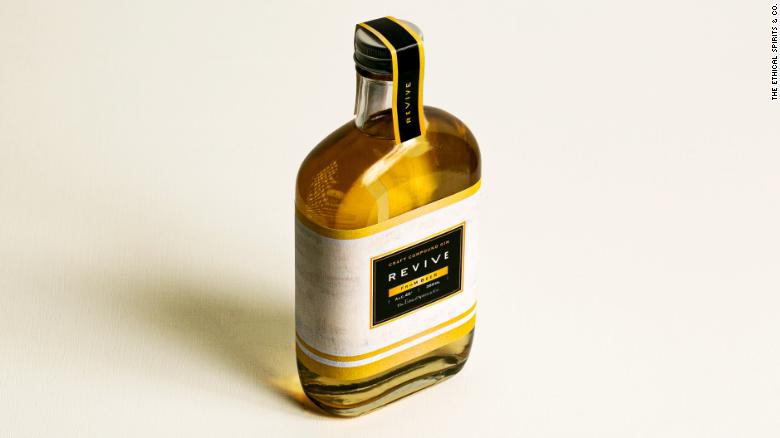
This was going to be a big year for Japan. With the Summer Olympics due to be hosted in Tokyo, the island nation expected 40 million tourists to grace its shores.
But when Covid-19 took hold, the Olympics were postponed and the already struggling economy took a further battering.
With bars and restaurants suffering a significant reduction in business beer sales in Japan dropped 26% by volume for the first half of the year, according to Bloomberg.
That's a big problem for small beer breweries, says Isamu Yoneda, head distiller at artisanal drinks maker Kiuchi Brewery. With few customers in its brewpubs, and export orders canceled, Kiuchi Brewery was left with a stockpile of spoiling beer.
The company had to come up with a solution — and decided to turn the unsold beer into a different alcoholic beverage.
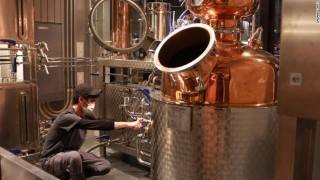
In April, Kiuchi Brewery launched the "Save Beer Spirits" campaign at its Tokyo distillery, offering local bars and breweries the chance to turn unused beer, a product with a four to six-month shelf life, into gin — a product without an expiration date.
In 1994, Japan relaxed its strict laws around microbrewing, sparking a boom in craft beer.
While overall beer sales in Japan have stagnated for the last decade, craft beer has been on the rise: its 0.5% share of the total beer market in 2007 had more than tripled by 2016.
Kiuchi Brewery — which began as a sake producer in 1823 — is one of many drinks producers that branched into craft beer when microbrewing laws changed. It has been making its signature Hitachino Nest craft beer for 24 years.
Yoneda says that turning beer into spirits isn't a new innovation. Kiuchi Brewery has been using beer to make plum wine liqueur for years, and has experimented with gin liqueurs in the past.
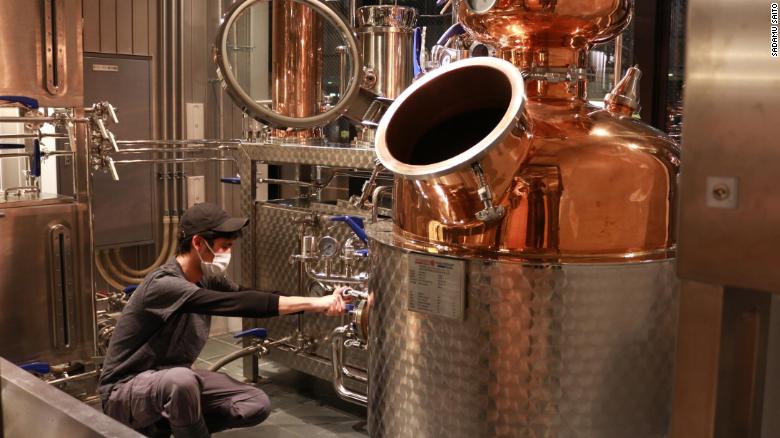
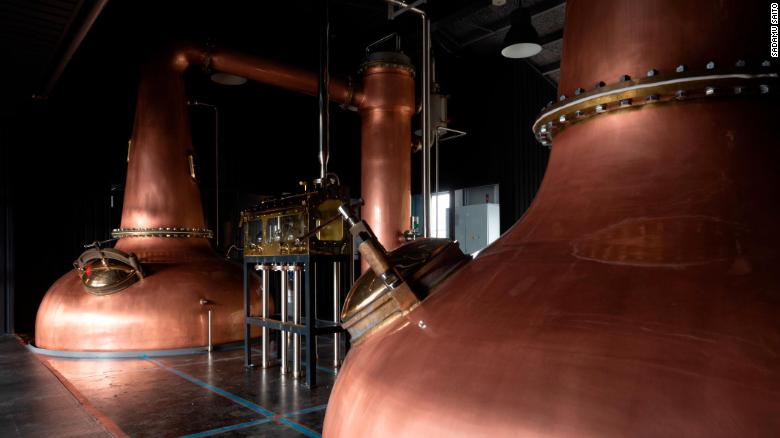
Most gins are made with a base of grains like barley, rye or wheat, which are fermented into a mash, then distilled into a high-proof "neutral" spirit. The spirit is then distilled a second time with juniper berries and other botanicals, which add flavor.

The beer replaces this neutral spirit, skipping the mash and fermentation process, and jumping straight to distillation.
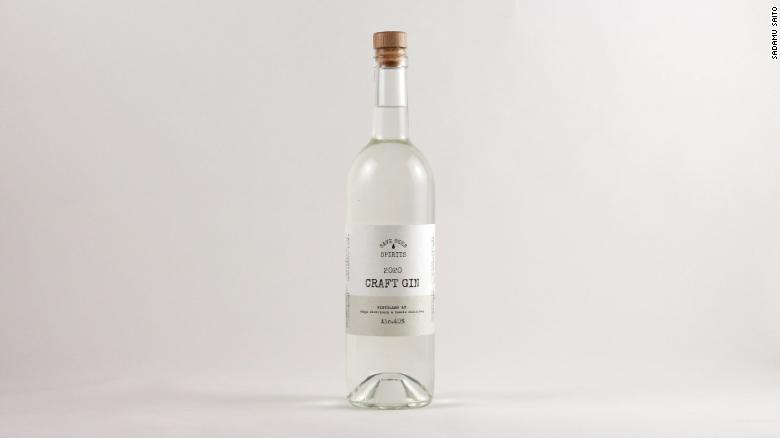
Kiuchi Brewery asked participating bars to send in a minimum of 20 liters of unused beer, which would be sent back as gin, says Yoneda. Kiuchi can produce eight liters of gin from every 100 liters of beer. It then sends back the gin as a standard 750ml bottle of gin or as a sparkling gin cocktail, either in cans or in a keg for bars to use in their taps.
Yoneda says the beer base makes the gin bitter, but in addition to juniper berries, Kiuchi uses sansho peppers, lemons and mikan (Japanese oranges), which helps to "balance out the bitterness" with "citrusy notes."
The bars only have to shoulder the cost of delivery, with Kiuchi Brewery offering its distillation service free of charge. "In these troublesome times, it is our responsibility to offer this service to everyone," says Yoneda. "Most importantly, we want to keep the breweries and bar community alive."

Kiuchi isn't the only brewery using beer to make gin.
The Ethical Spirits & Co was founded in February 2020 to help sake distillers turn leftover sake lees into new spirits, says co-founder Chikara Ono. When the pandemic hit and beer sales plummeted, Ono says the company began exploring new recipes to make gin from beer.
In May, they received a donation of 20,000 liters of expiring Budweiser from drinks giant AB InBev, who had a surplus of stock due to a drop in beer sales. The startup used the beer to create 4,500 bottles of gin.
"We had a problem of excess inventory and Ethical Spirits had the knowledge and the right ethos to create a product that we mutually thought would be a positive impact," says Takahiro Shimada, head of marketing for AB InBev Japan, adding that the company wanted to support local businesses.
The Ethical Spirits & Co is still in the process of building its own distillery in Tokyo, scheduled to open in December, so they collaborated with Gekkeikan sake distillery to distil the Budweiser.
The beer-based gin initiatives are tapping into a rapidly emerging market.
Japan's first dedicated gin distillery opened just four years ago in Kyoto, but the gin market is already estimated to be worth $209 million and is anticipated to grow by 4.4% annually over the next three years.
Large drinks companies, including Japanese whisky giants Suntory and Nikka, have helped launch Japanese craft gin onto the international stage.
Drinking trends in Japan are pointing towards gin sodas and ready-to-drink canned cocktails, creating an opportunity for creative spirit producers to sustainably reuse surplus drink stock, says Ono.
"If you can essentially use unused or remaining ingredients to create something special and something premium, that's great. It follows with our vision of trying to achieve a sustainable, circular economy," says Ono.
But when Covid-19 took hold, the Olympics were postponed and the already struggling economy took a further battering.
With bars and restaurants suffering a significant reduction in business beer sales in Japan dropped 26% by volume for the first half of the year, according to Bloomberg.
That's a big problem for small beer breweries, says Isamu Yoneda, head distiller at artisanal drinks maker Kiuchi Brewery. With few customers in its brewpubs, and export orders canceled, Kiuchi Brewery was left with a stockpile of spoiling beer.
The company had to come up with a solution — and decided to turn the unsold beer into a different alcoholic beverage.
In April, Kiuchi Brewery launched the "Save Beer Spirits" campaign at its Tokyo distillery, offering local bars and breweries the chance to turn unused beer, a product with a four to six-month shelf life, into gin — a product without an expiration date.
A mission to save beer
In 1994, Japan relaxed its strict laws around microbrewing, sparking a boom in craft beer.
While overall beer sales in Japan have stagnated for the last decade, craft beer has been on the rise: its 0.5% share of the total beer market in 2007 had more than tripled by 2016.
Kiuchi Brewery — which began as a sake producer in 1823 — is one of many drinks producers that branched into craft beer when microbrewing laws changed. It has been making its signature Hitachino Nest craft beer for 24 years.
Yoneda says that turning beer into spirits isn't a new innovation. Kiuchi Brewery has been using beer to make plum wine liqueur for years, and has experimented with gin liqueurs in the past.
Most gins are made with a base of grains like barley, rye or wheat, which are fermented into a mash, then distilled into a high-proof "neutral" spirit. The spirit is then distilled a second time with juniper berries and other botanicals, which add flavor.
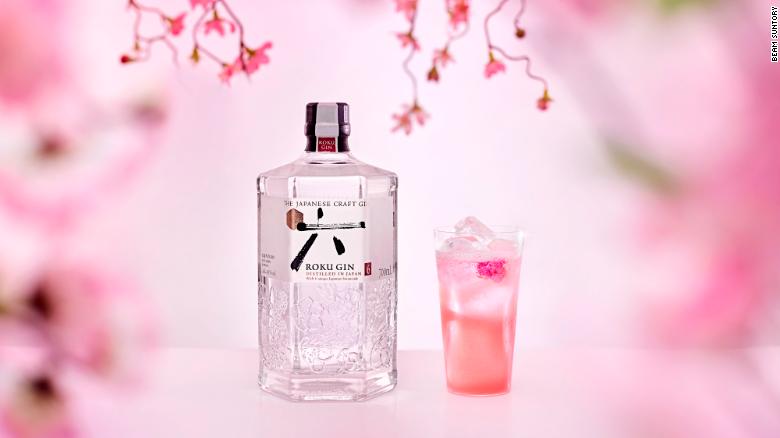
Kiuchi Brewery asked participating bars to send in a minimum of 20 liters of unused beer, which would be sent back as gin, says Yoneda. Kiuchi can produce eight liters of gin from every 100 liters of beer. It then sends back the gin as a standard 750ml bottle of gin or as a sparkling gin cocktail, either in cans or in a keg for bars to use in their taps.
Yoneda says the beer base makes the gin bitter, but in addition to juniper berries, Kiuchi uses sansho peppers, lemons and mikan (Japanese oranges), which helps to "balance out the bitterness" with "citrusy notes."
The bars only have to shoulder the cost of delivery, with Kiuchi Brewery offering its distillation service free of charge. "In these troublesome times, it is our responsibility to offer this service to everyone," says Yoneda. "Most importantly, we want to keep the breweries and bar community alive."
A sustainable spirit
Kiuchi isn't the only brewery using beer to make gin.
The Ethical Spirits & Co was founded in February 2020 to help sake distillers turn leftover sake lees into new spirits, says co-founder Chikara Ono. When the pandemic hit and beer sales plummeted, Ono says the company began exploring new recipes to make gin from beer.
In May, they received a donation of 20,000 liters of expiring Budweiser from drinks giant AB InBev, who had a surplus of stock due to a drop in beer sales. The startup used the beer to create 4,500 bottles of gin.
"We had a problem of excess inventory and Ethical Spirits had the knowledge and the right ethos to create a product that we mutually thought would be a positive impact," says Takahiro Shimada, head of marketing for AB InBev Japan, adding that the company wanted to support local businesses.
The Ethical Spirits & Co is still in the process of building its own distillery in Tokyo, scheduled to open in December, so they collaborated with Gekkeikan sake distillery to distil the Budweiser.
The beer-based gin initiatives are tapping into a rapidly emerging market.
Japan's first dedicated gin distillery opened just four years ago in Kyoto, but the gin market is already estimated to be worth $209 million and is anticipated to grow by 4.4% annually over the next three years.
Large drinks companies, including Japanese whisky giants Suntory and Nikka, have helped launch Japanese craft gin onto the international stage.
Drinking trends in Japan are pointing towards gin sodas and ready-to-drink canned cocktails, creating an opportunity for creative spirit producers to sustainably reuse surplus drink stock, says Ono.
"If you can essentially use unused or remaining ingredients to create something special and something premium, that's great. It follows with our vision of trying to achieve a sustainable, circular economy," says Ono.
- October 23, 2020
- Comment (9150)
- Trackback(1)
Comment(s) Write comment
While going through different curated resource collections and niche marketplace listings, I noticed something that stood out for its usability and simplicity, especially when seeing <a href="https://ivoryridgemarkethouse.shop/" />Ivory ridge vendor portal</a> included – Browsing here feels smooth, with nothing complicated or hard to understand, which makes everything feel clear and accessible.
-
Jamesmed Web Site
- April 26, 2026
While exploring high performance web pages, I encountered <a href="https://hiperfree.com/" />explore smooth loading hub</a> – The site has a clean interface, fast loading speeds, and smooth functionality that makes browsing feel effortless and well optimized.
-
ThomasCab Web Site
- April 26, 2026
During my browsing session across multiple websites, I noticed <a href="https://wildorchardvendorhall.shop/" />check it here</a> and found it helpful since everything is organized here, making it easy to understand and navigate without any confusion.
-
RandomNameRen Web Site
- April 26, 2026
Users exploring e commerce platforms often note that clean interfaces encourage longer browsing sessions, particularly when they find <a href="https://floraridgevendorroom.shop/" />Floraridge Retail Hub Link</a> – The browsing experience is described as more efficient, with better organized product groupings and improved accessibility that supports quicker decision making
-
WilliamVag Web Site
- April 26, 2026
While going through various recommendation threads and curated online resources, I came across something that felt quite stable and well organized, especially when seeing <a href="https://iciclebrookmarketroom.shop/" />this reliable access link</a> – it has a simple structure that feels trustworthy, so I may return later for deeper inspection.
-
GregoryWen Web Site
- April 26, 2026
People who enjoy clear financial dashboards often explore sites like <a href="https://riverharbortrading.shop/" />Harbor River Trade Analytics Hub</a> where information is structured cleanly – The interface ensures users can access trading insights quickly and without confusion.
-
Scottlib Web Site
- April 26, 2026
Across usability testing environments for experimental storefront systems, reviewers observed strong visual brightness and cohesive sun themed branding, but noted that informational density drops sharply at a href="[https://sunharborvendorroom.shop/](https://sunharborvendorroom.shop/)" />sun harbor vendor hub access panel</a> where the surrounding UI suggests marketplace readiness while the vendor room itself remains empty of descriptions, making Sun harbor feel partially implemented despite its polished aesthetic
-
Edmundwab Web Site
- April 26, 2026
During an extended browsing session of vendor marketplace platforms and digital gallery showcase systems for design reference <a href="https://pearlcovemarketgallery.shop/" />Pearl Cove market exhibit site</a> I found the navigation steady and logical which allowed uninterrupted exploration across different sections. – Overall performance was smooth and content loaded without any noticeable delays
-
AntonioSpili Web Site
- April 26, 2026
While reviewing different digital trade gallery systems and online vendor showcase platforms for design ideas and performance evaluation purposes across sample layouts <a href="https://dunemeadowvendorparlor.shop/" />Dune Meadow trade gallery entry</a> navigation stayed fluid and pages responded quickly without delay making the experience easy to follow – Clean and organized browsing with consistent responsiveness and simple structure across all pages
-
WilliamSnoma Web Site
- April 26, 2026
my latest blog post [url=https://sites.google.com/view/petra-aptos-wallet/petra-aptos-wallet]petra wallet chrome[/url]
-
Davidaveby Web Site
- April 26, 2026
While reviewing ecommerce gallery UI frameworks, testers highlighted recurring duplication where <a href="https://dunecovemarketgallery.shop/" /> dune inspired vendor gallery market hub sections appear cloned across multiple pages, creating strong indicators of AI template spam affecting user perception especially during usability testing and interface validation sessions overall in controlled environments observed
-
ErnestLak Web Site
- April 26, 2026
While reviewing digital vendor collective marketplaces, I came across <a href="https://oakmeadowvendorcollective.shop/" />visit oak meadow commerce lane collective</a> – The product photos are really clean, and the descriptions are helpful, making products easier to evaluate.
-
HarryNeply Web Site
- April 26, 2026
During my browsing of commerce marketplace directories and vendor hall sites, I noticed recurring patterns in store naming that felt suspiciously familiar, particularly <a href="https://alpineharborvendorhall.shop/" />Harbor alpine trade vendor hall page</a> – It honestly triggered a bit of déjà vu while scrolling through these similar-looking listings.
-
Michaelskync Web Site
- April 26, 2026
Across usability testing sessions for ecommerce templates analysts frequently notice unexpected embedded links inside structured layouts <a href="https://driftorchardvendorhall.shop/" /> orchard hall storefront access</a> that appear to open full vendor sections but instead load simplified pages with almost no meaningful listings or category expansion – The driftwood inspired vibe is pleasant yet the storefront feels understocked and incomplete overall
-
Michaelses Web Site
- April 26, 2026
Trackback (You need to login.)
https://cbgvwuh.christliche-beratung-hommel.de
- beutelglueck
- October 7, 2023
In usability analysis of ecommerce templates and demo storefronts, observers identified a navigation strip containing <a href="https://driftwillowmarketroom.shop/" />driftwood willow hub entry</a> embedded within content flow – the site gives a half finished impression as willow tree visuals are not implemented and several sections appear visually empty or underdeveloped
Stanleyvosse Web Site- April 26, 2026