
Loading

Search
▼ Global City Leaders at G-NETS Summit Adopt Statement Highlighting Climate, Natural Disaster Measures
- Category:Other
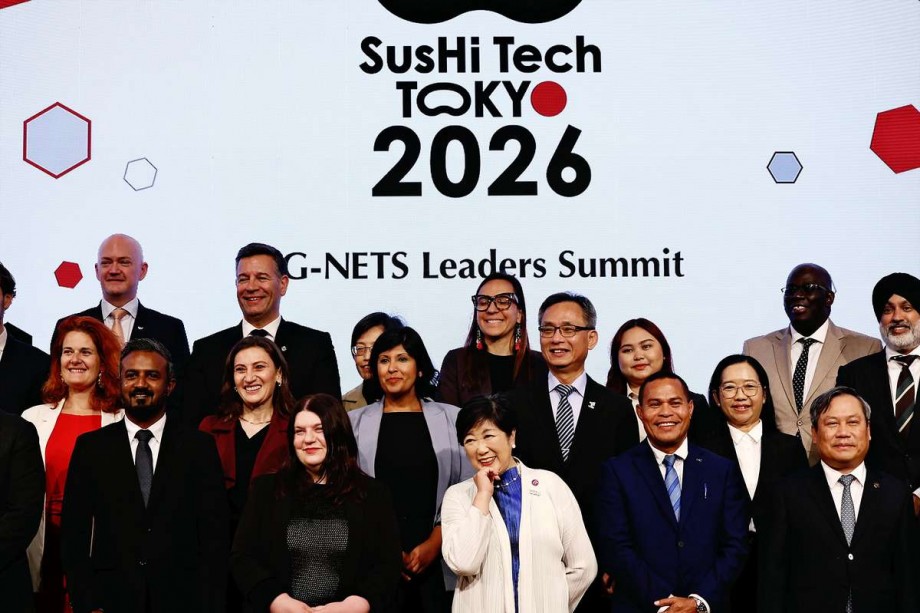
Leaders from major cities around the world, gathered in Tokyo for the G-NETS Leaders Summit, have adopted a joint statement stressing the importance of inter-city cooperation for strengthening natural disaster and climate change measures.
The summit was held in conjunction with SusHi Tech Tokyo 2026, an international event organized by the Tokyo metropolitan government to foster exchanges among startups, major corporations, researchers and investors.
The summit lasted three days and explored solutions to the challenges facing modern society.
Mayors and governors from about 50 cities participated in G-NETS, holding in-depth discussions on disaster preparedness, greening cities and other topics.
The joint statement released on Tuesday reaffirmed that disaster measures are an urgent common challenge for the cities.
“We will promote the real-world application of cutting-edge technologies through startup support and utilization, and have this contribute to enhancing the well-being for residents,” the statement reads.
“Action Announcements by Participating Cities” were also issued for the first time on Tuesday, with cities outlining specific measures.
Tokyo’s action announcement, signed by Gov. Yuriko Koike, reads, “To protect Tokyo’s residents from increasingly severe and frequent torrential rainfall, the Tokyo Metropolitan Government will advance the construction of regulating reservoirs to bring a cumulative storage capacity of 3.65 million cubic meters online by FY2035.”
As to the summit’s achievements, she said, “As cities face a variety of disasters, we not only compiled a joint statement, we talked about its execution.”
On the final day of the summit, the Tokyo-Southeast Asia Capitals Dialogue for Sustainability (TOKYO-SEADS), a forum bringing together leaders from Tokyo and Southeast Asian cities, was held for the first time on Wednesday.
The forum aims to strengthen cooperation with Southeast Asia, which is close geographically and shares vibrant cultural and economic ties with Tokyo.
The leaders discussed insights and exchanged views on the themes of tackling storm and flood disasters and developing urban infrastructure.
On Wednesday, the forum issued a joint statement on advancing practical initiatives.
“The threat of storms, floods and other natural disasters has notably been growing, year after year,” said Koike in closing remarks at the forum.
“We will focus on the areas of storm and flood countermeasures, urban infrastructure development, renewal and maintenance and the usage of digital technologies as we aim to create a resilient and a sustainable urban future together … Tokyo will further strengthen cooperation with the participating capitals.”
Leaders also visited the Tokyo metropolitan government’s Storm Surge Management Center in Koto Ward, Tokyo, on Wednesday. They observed the management and operation of harbor gates and the maintenance of seawalls and drainage pump stations.
The next G-NETS summit is scheduled to be held in two years.
The summit was held in conjunction with SusHi Tech Tokyo 2026, an international event organized by the Tokyo metropolitan government to foster exchanges among startups, major corporations, researchers and investors.
The summit lasted three days and explored solutions to the challenges facing modern society.
Mayors and governors from about 50 cities participated in G-NETS, holding in-depth discussions on disaster preparedness, greening cities and other topics.
The joint statement released on Tuesday reaffirmed that disaster measures are an urgent common challenge for the cities.
“We will promote the real-world application of cutting-edge technologies through startup support and utilization, and have this contribute to enhancing the well-being for residents,” the statement reads.
“Action Announcements by Participating Cities” were also issued for the first time on Tuesday, with cities outlining specific measures.
Tokyo’s action announcement, signed by Gov. Yuriko Koike, reads, “To protect Tokyo’s residents from increasingly severe and frequent torrential rainfall, the Tokyo Metropolitan Government will advance the construction of regulating reservoirs to bring a cumulative storage capacity of 3.65 million cubic meters online by FY2035.”
As to the summit’s achievements, she said, “As cities face a variety of disasters, we not only compiled a joint statement, we talked about its execution.”
On the final day of the summit, the Tokyo-Southeast Asia Capitals Dialogue for Sustainability (TOKYO-SEADS), a forum bringing together leaders from Tokyo and Southeast Asian cities, was held for the first time on Wednesday.
The forum aims to strengthen cooperation with Southeast Asia, which is close geographically and shares vibrant cultural and economic ties with Tokyo.
The leaders discussed insights and exchanged views on the themes of tackling storm and flood disasters and developing urban infrastructure.
On Wednesday, the forum issued a joint statement on advancing practical initiatives.
“The threat of storms, floods and other natural disasters has notably been growing, year after year,” said Koike in closing remarks at the forum.
“We will focus on the areas of storm and flood countermeasures, urban infrastructure development, renewal and maintenance and the usage of digital technologies as we aim to create a resilient and a sustainable urban future together … Tokyo will further strengthen cooperation with the participating capitals.”
Leaders also visited the Tokyo metropolitan government’s Storm Surge Management Center in Koto Ward, Tokyo, on Wednesday. They observed the management and operation of harbor gates and the maintenance of seawalls and drainage pump stations.
The next G-NETS summit is scheduled to be held in two years.
- April 29, 2026
- Comment (0)
- Trackback(0)