
Loading

Search
▼ Japan Deploys New Hypersonic, Anti-ship Missiles
- Category:Other
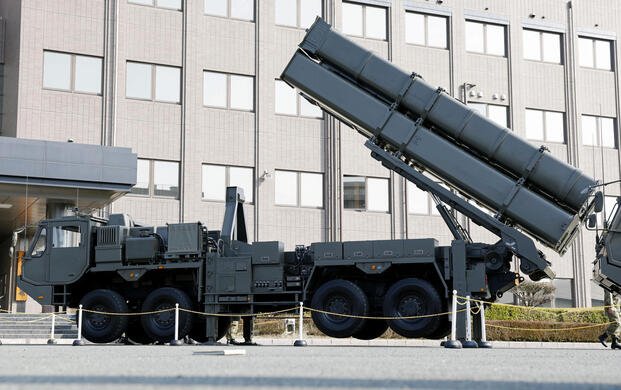
Tokyo’s first batch of long-range strike missiles capable of reaching ground and maritime targets at extended ranges have been operationally fielded, according to Japan’s defense ministry.
The Japan Ground Self-Defense Force (JGSDF) announced Monday the deployment of the Type 25 series of missiles. While the missiles share the same designation, their variants are split through surface-to-ship (SSM) and hypervelocity gliding projectile (HGP) classifications.
Capable of striking targets over 1,000 kilometers away, basing the Type 25 series anti-ship missiles at the service’s Kengun Western Army base in Kyushu enables Japanese forces to hit maritime targets across the country’s southwestern region, the East China Sea and mainland China. The SSM variant is derived from the domestically-made Type 12.
While the hypersonic variant is deployed at the JGSDF’s Fuji base, the service has practiced deploying the system via air and maritime means. Future variants of the Type 25-HGP plan to extend the hypersonic’s range to between 2,000 and 3,000 kilometers.
“These equipment are important in enhancing Japan’s deterrence and response capabilities. The Ground Self Defense Force will always stand with the people of Japan and will continue to make every effort to protect their safety and security,” reads a JGSDF statement on the deployment.
Amid regional tensions, Japan has prioritized a build-up of military forces in its southwestern region. The Ryukyu Islands, an archipelagic chain stretching from mainland Japan to Taiwan, received numerous missile bases, radar sites and additional defensive infrastructure following concerns of a cross strait conflict and Chinese ambitions over the disputed Senakaku Islands.
These missiles represent a significant capability boost for the Japan Self-Defense Forces (JSDF) in their plans to deter China and North Korea through long-range strike munitions.
The development, production and fielding of these missiles are part of a broader force-wide shift from its Cold War defensive mission against a northern Soviet threat to increasingly complex and capable Chinese military activities occurring around the southwestern region.
Tokyo plans to procure large quantities of long-range missiles and equip numerous mobile ground, naval and air platforms with the missiles. When fielded, this large missile inventory has the potential to hold regional adversaries at risk.
Chinese state media has expressed concern over the deployment, claiming that their operational fielding represents a breach of Tokyo’s post-World War II pledge to not procure weapons unrelated to self-defense via Article 9 of Japan’s constitution.
Washington’s recent arms sales are also playing a major role in developing Tokyo’s newfound counterstrike capabilities. In 2024, Japan finalized the purchase of 400 Tomahawk cruise missiles, which will be fielded on its fleet of Aegis guided-missile destroyers.
Last week saw the successful integration of Tomahawk-related launching systems and crew training aboard the first Japan Maritime Self-Defense Force warship that will equip the American cruise missiles, USNI News reported. For the Type 25-HGP, the U.S. previously approved arms sales supporting its development and has hosted test launches in California.
These efforts also coincide with U.S. military efforts to strengthen long-range precision strike capabilities across the first island chain in the Philippines and Japan to deter China.
Washington has eyed its allies in the region to host these capabilities, which could prove crucial in a potential Taiwan contingency against Beijing’s large array of naval forces.
- April 2, 2026
- Comment (0)
- Trackback(0)