
Loading

Search
▼ Japan, Australia Affirm Closer Cooperation In Securing Minerals, Energy
- Category:Other
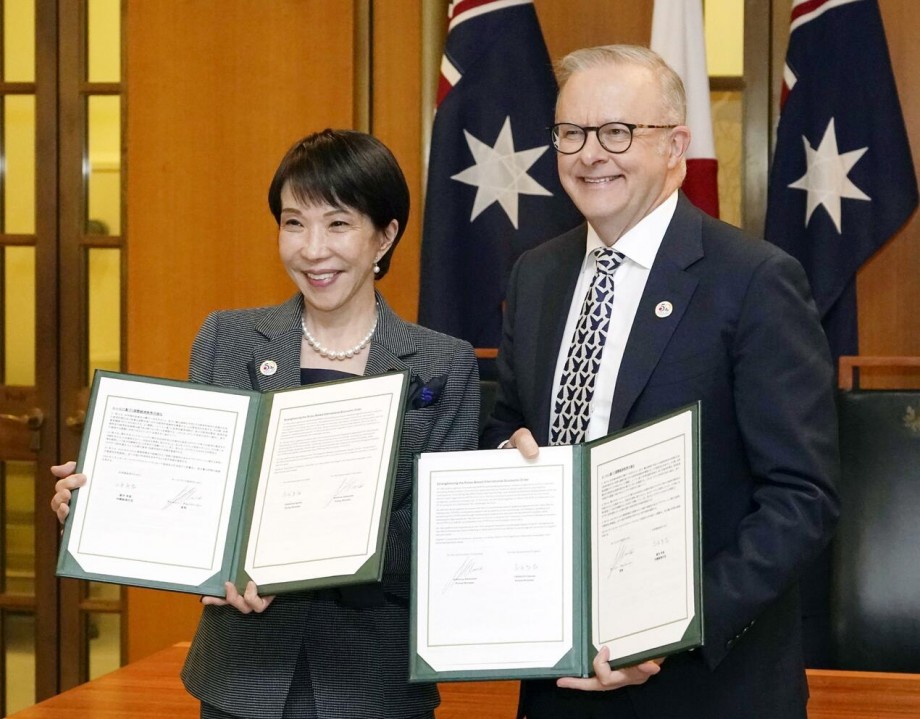
The leaders of Japan and Australia agreed Monday to step up their collaboration to ensure stable supplies of critical minerals, energy and other essentials, amid China's rare earth dominance and the conflict in the Middle East.
Issuing five outcome documents at their meeting in Canberra, including a joint declaration on economic security, Japanese Prime Minister Sanae Takaichi and her Australian counterpart Anthony Albanese also affirmed that their countries will further promote cooperation on defense and cybersecurity.
Japan and Australia "share a firm commitment to contributing to peace and stability in the region and the international community" and are "the front-runners of collaboration among like-minded partners," Takaichi told a joint press event after the talks, describing the countries' ties as "a quasi-alliance."
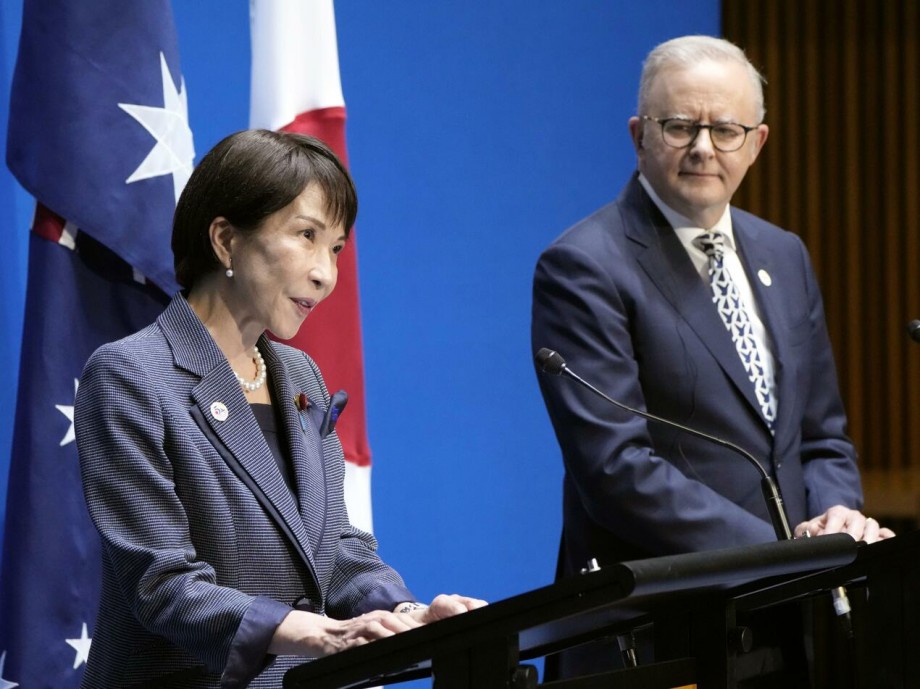
Albanese said the leaders agreed on a range of "ambitious outcomes that comprehensively elevate our special strategic partnership" and the two countries "have never been more strategically aligned."
Under the joint declaration focused on building resilient supply chains for rare earths, energy resources and food products, among other items, they expressed their "strong concerns" over export restrictions on critical minerals, in an apparent reference to China's recent tightening of export controls.
Rare earths are essential for products using cutting-edge technologies such as electric vehicles and semiconductors. China is said to mine around 70 percent of the world's rare earths and refine about 90 percent of them, and Australia is also known as a major producer.
Japan is highly reliant on China for its procurement of rare earths. Since earlier this year Beijing has tightened its restrictions on exports of dual-use items, which can be used for both civilian and military purposes, with rare earths possibly included.
Under the joint declaration focused on building resilient supply chains for rare earths, energy resources and food products, among other items, they expressed their "strong concerns" over export restrictions on critical minerals, in an apparent reference to China's recent tightening of export controls.
Rare earths are essential for products using cutting-edge technologies such as electric vehicles and semiconductors. China is said to mine around 70 percent of the world's rare earths and refine about 90 percent of them, and Australia is also known as a major producer.
Japan is highly reliant on China for its procurement of rare earths. Since earlier this year Beijing has tightened its restrictions on exports of dual-use items, which can be used for both civilian and military purposes, with rare earths possibly included.
The measure was taken in an apparent response to Takaichi's remarks in parliament in November that Japan could potentially deploy its Self-Defense Forces in support of the United States in the event of an attack on Taiwan, a self-ruled democratic island claimed by China.
The U.S.-Israeli conflict with Iran since late February has disrupted global crude oil transportation and caused price hikes, posing challenges to countries heavily dependent on oil and petroleum product imports like Japan.
While Australia, known for rich natural resources, is Japan's largest liquefied natural gas supplier, it also greatly relies on petroleum product imports such as gasoline and diesel from Asian nations heavily dependent on Middle Eastern crude oil, following a series of Australian refinery closures over decades.
Sharing concerns over China's military activities in the Indo-Pacific region, Japan and Australia have been boosting security cooperation in recent years as their reciprocal access agreement, which enables faster troop deployment and facilitates joint drills, took effect in 2023.
The U.S.-Israeli conflict with Iran since late February has disrupted global crude oil transportation and caused price hikes, posing challenges to countries heavily dependent on oil and petroleum product imports like Japan.
While Australia, known for rich natural resources, is Japan's largest liquefied natural gas supplier, it also greatly relies on petroleum product imports such as gasoline and diesel from Asian nations heavily dependent on Middle Eastern crude oil, following a series of Australian refinery closures over decades.
Sharing concerns over China's military activities in the Indo-Pacific region, Japan and Australia have been boosting security cooperation in recent years as their reciprocal access agreement, which enables faster troop deployment and facilitates joint drills, took effect in 2023.
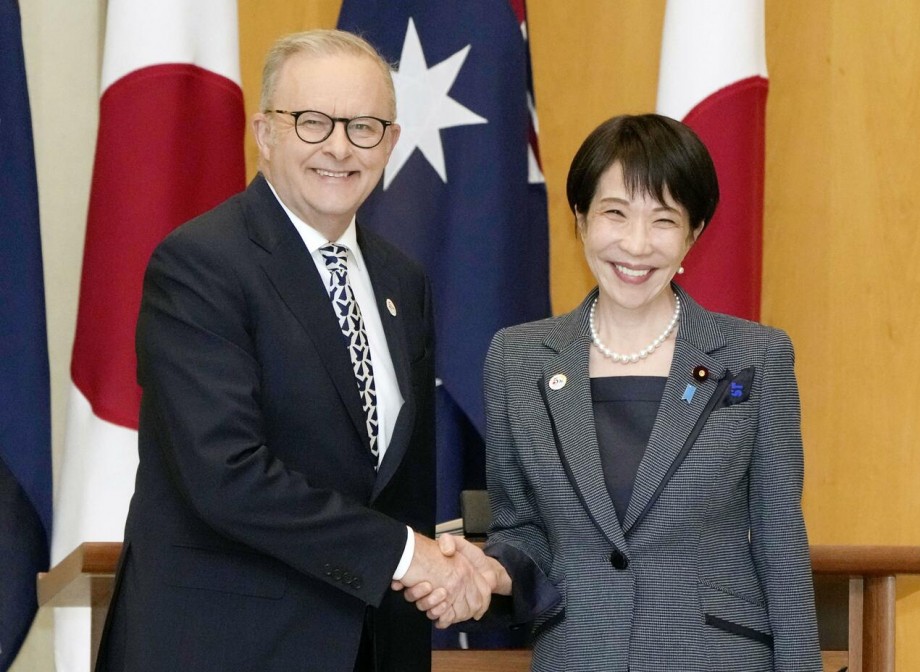
Takaichi and Albanese welcomed their countries' announcement last month regarding the conclusion of contracts to jointly deliver the first three of 11 ships for the Australian navy based on the upgraded Mogami-class vessel, a Japanese multi-mission stealth frigate.
The leaders of the two U.S. allies also agreed to explore concrete measures by the time of their next meeting to elevate and institutionalize their comprehensive security cooperation, including economic security, Takaichi said.
The visit to Australia by Takaichi, who took office in October, coincides with the 50th anniversary this year of the two nations' signing of a basic treaty of friendship and cooperation.
The meeting with Albanese was part of Takaichi's five-day overseas trip from Friday that also took her to Vietnam prior to Canberra.
Later Monday, Takaichi told reporters that she was able to deepen her personal relations with the Vietnamese and Australian leaders and confirmed Japan would advance concrete collaborations with the two countries toward the "shared goal of making the whole region strong and prosperous."
The leaders of the two U.S. allies also agreed to explore concrete measures by the time of their next meeting to elevate and institutionalize their comprehensive security cooperation, including economic security, Takaichi said.
The visit to Australia by Takaichi, who took office in October, coincides with the 50th anniversary this year of the two nations' signing of a basic treaty of friendship and cooperation.
The meeting with Albanese was part of Takaichi's five-day overseas trip from Friday that also took her to Vietnam prior to Canberra.
Later Monday, Takaichi told reporters that she was able to deepen her personal relations with the Vietnamese and Australian leaders and confirmed Japan would advance concrete collaborations with the two countries toward the "shared goal of making the whole region strong and prosperous."
- May 4, 2026
- Comment (0)
- Trackback(0)