
Loading

Search
▼ Japan PM Shows Support For Pakistani Efforts To Mediate U.S., Iran Conflict
- Category:Other
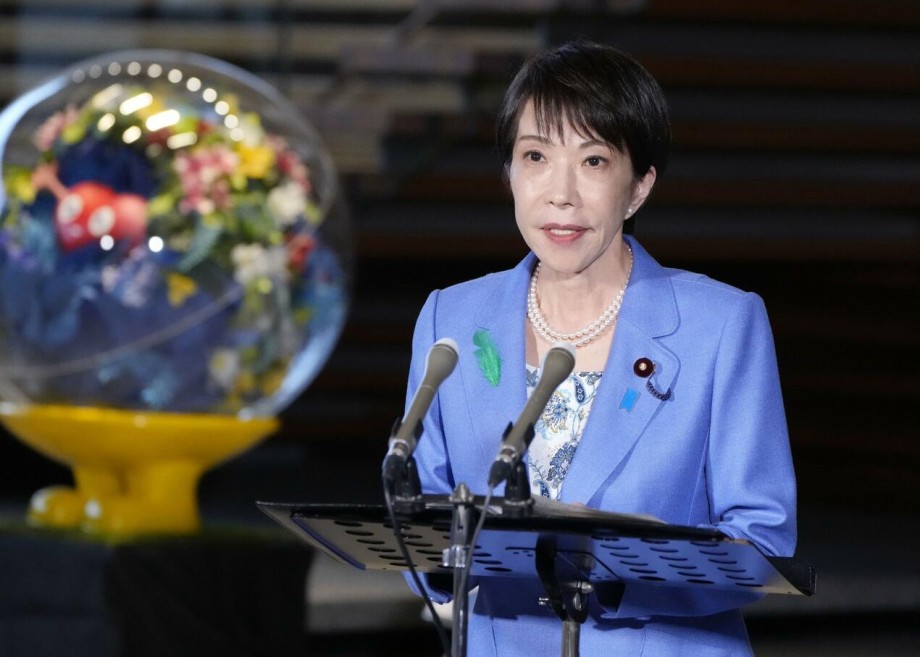
Japanese Prime Minister Sanae Takaichi said Monday she conveyed her support for Pakistan's mediation efforts in the U.S.-Iran conflict during phone talks with the country's Prime Minister Shehbaz Sharif, after recent peace negotiations between the warring parties in Islamabad yielded no agreement.
Takaichi and Sharif also affirmed that Japan and Pakistan will work toward an early deescalation of the Middle East situation and safe navigation through the Strait of Hormuz, a key waterway for global energy transportation, she told reporters in Tokyo.
Takaichi said she explained to Sharif about Japan's view. "What is the most important is that a final agreement will be concluded early through dialogue," she said, adding that Tokyo will continue to collaborate with the international community.
The United States and Iran agreed on a two-week ceasefire last week but failed to reach a peace deal in two days of negotiations through Sunday in the Pakistani capital.
Following the development, the U.S. military said it will begin blocking all ships entering and leaving Iranian ports and coastal areas from Monday at 10 a.m. in Washington.
Japan relies on the Middle East for more than 90 percent of its crude oil imports. Most transit the strait, which Iran has effectively closed since the United States and Israel began attacking the country in late February.
Japan, a close U.S. security ally, has traditionally maintained friendly relations with Iran.
Chief Cabinet Secretary Minoru Kihara told a press conference that Japan has made no decision on whether to send its Self-Defense Forces for minesweeping operations in the strait, where Iran may have laid mines to support its de facto blockade.
On Monday, Takaichi also held phone talks with To Lam, leader of Vietnam's ruling Communist Party who doubles as the country's president since last Tuesday.
Takaichi said the two agreed to strengthen the energy resilience of Asia, whose dependency on oil imports from Middle East is relatively high.
Takaichi and Sharif also affirmed that Japan and Pakistan will work toward an early deescalation of the Middle East situation and safe navigation through the Strait of Hormuz, a key waterway for global energy transportation, she told reporters in Tokyo.
Takaichi said she explained to Sharif about Japan's view. "What is the most important is that a final agreement will be concluded early through dialogue," she said, adding that Tokyo will continue to collaborate with the international community.
The United States and Iran agreed on a two-week ceasefire last week but failed to reach a peace deal in two days of negotiations through Sunday in the Pakistani capital.
Following the development, the U.S. military said it will begin blocking all ships entering and leaving Iranian ports and coastal areas from Monday at 10 a.m. in Washington.
Japan relies on the Middle East for more than 90 percent of its crude oil imports. Most transit the strait, which Iran has effectively closed since the United States and Israel began attacking the country in late February.
Japan, a close U.S. security ally, has traditionally maintained friendly relations with Iran.
Chief Cabinet Secretary Minoru Kihara told a press conference that Japan has made no decision on whether to send its Self-Defense Forces for minesweeping operations in the strait, where Iran may have laid mines to support its de facto blockade.
On Monday, Takaichi also held phone talks with To Lam, leader of Vietnam's ruling Communist Party who doubles as the country's president since last Tuesday.
Takaichi said the two agreed to strengthen the energy resilience of Asia, whose dependency on oil imports from Middle East is relatively high.
- April 13, 2026
- Comment (0)
- Trackback(0)