
Loading

Search
▼ Japan Nears 10% Foreign Population Years Ahead Of Official Forecasts
- Category:Other
Japan is moving toward a 10 percent foreign population far faster than official projections, with dozens of municipalities already crossing the threshold and one village reporting that more than a third of its residents are foreign nationals.
A national research institute has estimated that foreigners will account for 10.8 percent of Japan's population by 2070. But an analysis of Basic Resident Register data shows the shift is already well under way at the local level. As of January, 27 municipalities had foreign resident ratios above 10 percent, led by the village of Shimukappu in Hokkaido at 36.6.
The trend suggests the nationwide transition could arrive much earlier than forecast, raising questions about how daily life will change in a country long defined by demographic homogeneity.
In Tobishima in central Japan's Aichi Prefecture, a community of 4,713 overlooking Ise Bay, foreign residents numbered 501 as of January, accounting for 10.6 percent of the population.
On weekday evenings, foreign workers in uniforms cycle through the village. On weekends, nearly half the passengers on local buses are foreign nationals.
Residents say the increase has accelerated over the past few years. Many foreign workers are employed at factories under Japan's technical intern training or "specified skills" programs, filling labor shortages at small and midsize businesses. Others work in used car sales.
Reactions among residents vary.
A 54-year-old female farmer said foreign residents cheerfully help with garden work and work hard, while a 78-year-old male farmer said he has noticed no particular problems despite their rapid increase.
Others remain cautious. Some residents complain that foreign drivers ignore traffic rules. A 75-year-old self-employed woman said she appreciates their labor but worries the number of people unfamiliar with Japanese customs will grow, while an 83-year-old woman said the sudden changes in her surroundings leave her feeling uneasy.
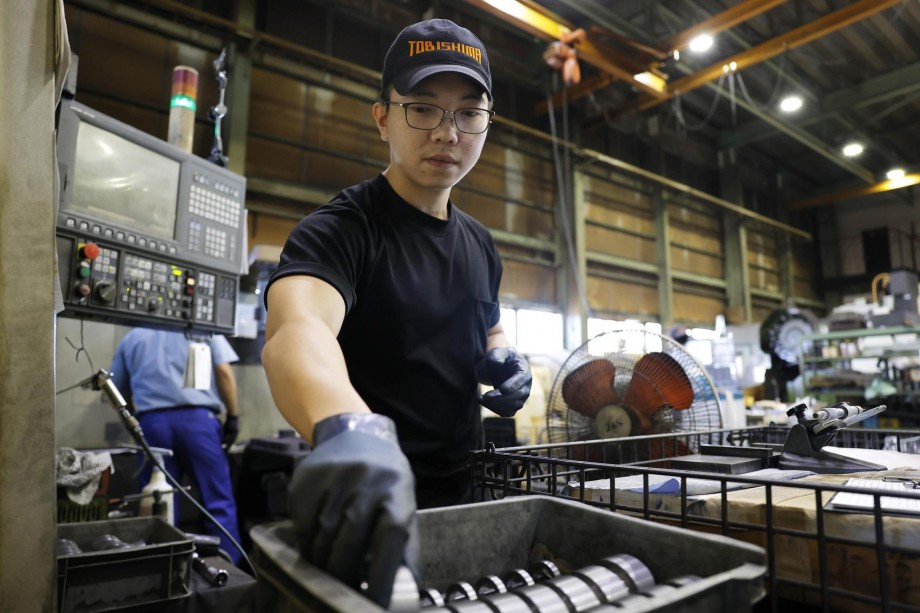
Near Nagoya Port, beyond a stretch of warehouses and factories, the Tobishima Seisakusho manufacturing plant operates amid quiet farmland. The company produces parts for refrigeration and cooling equipment.
Four of its 21 employees are Vietnamese nationals working under technical internship or specified skills visas.
Company president Hideki Ito, 73, said their presence is essential. "They're a valuable asset, a treasure," he said. "If they were to quit, the company couldn't survive."
Young Japanese moving to urban areas
Ito said younger Japanese residents have moved to cities, leaving local employers struggling to recruit. Even when Japanese workers are hired, some leave within a year.
"Considering the company's future, having young Japanese workers would be much more preferable, but that's simply not feasible. We had no choice," said Ito.
The company began accepting Vietnamese workers in 2017 after hearing of their diligence through word of mouth and gradually increased their numbers. Pay and bonuses are almost the same as for Japanese employees, he said.
The four workers live together on company premises. Nguyen Manh Ha, 28, has worked at the company for about six years. He sends 120,000 to 150,000 yen a month to his family in Vietnam, spending about 20,000 to 30,000 yen on himself. "I enjoy my work," he said. "If possible, I would like to work in Japan forever."
Population data compiled as of the beginning of the year from the Basic Resident Register for 1,892 municipalities shows that high concentrations of foreign residents are clustered in industrial and tourist areas, as well as communities with long-established foreign populations.
Shimukappu, home to the Tomamu resort area, recorded 582 foreign residents out of a population of 1,590. Five other municipalities had foreign resident ratios above 20 percent, including the Hokkaido village of Akaigawa, the town of Kutchan in Hokkaido, Ikuno Ward in Osaka, and the town of Oizumi in Gunma Prefecture.
In contrast, two villages -- including Nishimeya in Aomori Prefecture -- reported zero foreign residents.
According to statistics, the number of foreign residents nationwide stood at 3.76 million at the end of 2024, up 350,000 from the previous year, the largest annual increase on record.
Until the 1960s, Japan's foreign population generally hovered around 600,000. Numbers rose more clearly after a 1990 revision of the Immigration and Refugee Act allowed people of Japanese descent to live in Japan as permanent residents.
After falling following the global financial crisis and again during the COVID-19 pandemic, the foreign population is now in its third expansionary phase.
The National Institute of Population and Social Security Research projects Japan's total population will fall below 87 million by 2070. Its latest forecast assumes the foreign population will grow by about 160,000 people a year until around 2040, pushing the foreign share above 10 percent by 2070.
Current trends are outpacing that projection. Since 2022, the foreign population has been increasing by about 300,000 a year, reaching 350,000 in 2024. In July, then Justice Minister Keisuke Suzuki said Japan should assume the foreign population will exceed 10 percent by around 2040 -- roughly 30 years earlier than the institute's estimate.
Japan's labor shortage is expected to intensify. The working-age population aged 15 to 64 is projected to decline by 15 million between 2020 and 2040.
Even a sudden reversal in the falling birthrate would not be sufficient to offset the shortfall. While automation and artificial intelligence offer some relief, reliance on foreign labor is expected to continue.
The rapid demographic shift is fueling political debate. Prime Minister Sanae Takaichi's coalition government with the Japan Innovation Party has called for tighter controls on foreigners. In a policy speech, she said illegal activity and rule-breaking by some of them had created public anxiety and a sense of unfairness.
Others argue coexistence is unavoidable. Tsukasa Sasai, a demography professor at Fukui Prefectural University, said Japan can no longer function without foreign residents.
"Japan is already a society that cannot survive without coexistence with foreigners," he said. "Creating an environment where foreigners can successfully establish themselves as part of the workforce would offer significant benefits to Japanese society."
As more municipalities pass the 10 percent mark, questions about how Japan accepts and integrates foreign residents are shifting from long-term projections to immediate policy choices.
A national research institute has estimated that foreigners will account for 10.8 percent of Japan's population by 2070. But an analysis of Basic Resident Register data shows the shift is already well under way at the local level. As of January, 27 municipalities had foreign resident ratios above 10 percent, led by the village of Shimukappu in Hokkaido at 36.6.
The trend suggests the nationwide transition could arrive much earlier than forecast, raising questions about how daily life will change in a country long defined by demographic homogeneity.
In Tobishima in central Japan's Aichi Prefecture, a community of 4,713 overlooking Ise Bay, foreign residents numbered 501 as of January, accounting for 10.6 percent of the population.
On weekday evenings, foreign workers in uniforms cycle through the village. On weekends, nearly half the passengers on local buses are foreign nationals.
Residents say the increase has accelerated over the past few years. Many foreign workers are employed at factories under Japan's technical intern training or "specified skills" programs, filling labor shortages at small and midsize businesses. Others work in used car sales.
Reactions among residents vary.
A 54-year-old female farmer said foreign residents cheerfully help with garden work and work hard, while a 78-year-old male farmer said he has noticed no particular problems despite their rapid increase.
Others remain cautious. Some residents complain that foreign drivers ignore traffic rules. A 75-year-old self-employed woman said she appreciates their labor but worries the number of people unfamiliar with Japanese customs will grow, while an 83-year-old woman said the sudden changes in her surroundings leave her feeling uneasy.
Near Nagoya Port, beyond a stretch of warehouses and factories, the Tobishima Seisakusho manufacturing plant operates amid quiet farmland. The company produces parts for refrigeration and cooling equipment.
Four of its 21 employees are Vietnamese nationals working under technical internship or specified skills visas.
Company president Hideki Ito, 73, said their presence is essential. "They're a valuable asset, a treasure," he said. "If they were to quit, the company couldn't survive."
Young Japanese moving to urban areas
Ito said younger Japanese residents have moved to cities, leaving local employers struggling to recruit. Even when Japanese workers are hired, some leave within a year.
"Considering the company's future, having young Japanese workers would be much more preferable, but that's simply not feasible. We had no choice," said Ito.
The company began accepting Vietnamese workers in 2017 after hearing of their diligence through word of mouth and gradually increased their numbers. Pay and bonuses are almost the same as for Japanese employees, he said.
The four workers live together on company premises. Nguyen Manh Ha, 28, has worked at the company for about six years. He sends 120,000 to 150,000 yen a month to his family in Vietnam, spending about 20,000 to 30,000 yen on himself. "I enjoy my work," he said. "If possible, I would like to work in Japan forever."
Population data compiled as of the beginning of the year from the Basic Resident Register for 1,892 municipalities shows that high concentrations of foreign residents are clustered in industrial and tourist areas, as well as communities with long-established foreign populations.
Shimukappu, home to the Tomamu resort area, recorded 582 foreign residents out of a population of 1,590. Five other municipalities had foreign resident ratios above 20 percent, including the Hokkaido village of Akaigawa, the town of Kutchan in Hokkaido, Ikuno Ward in Osaka, and the town of Oizumi in Gunma Prefecture.
In contrast, two villages -- including Nishimeya in Aomori Prefecture -- reported zero foreign residents.
According to statistics, the number of foreign residents nationwide stood at 3.76 million at the end of 2024, up 350,000 from the previous year, the largest annual increase on record.
Until the 1960s, Japan's foreign population generally hovered around 600,000. Numbers rose more clearly after a 1990 revision of the Immigration and Refugee Act allowed people of Japanese descent to live in Japan as permanent residents.
After falling following the global financial crisis and again during the COVID-19 pandemic, the foreign population is now in its third expansionary phase.
The National Institute of Population and Social Security Research projects Japan's total population will fall below 87 million by 2070. Its latest forecast assumes the foreign population will grow by about 160,000 people a year until around 2040, pushing the foreign share above 10 percent by 2070.
Current trends are outpacing that projection. Since 2022, the foreign population has been increasing by about 300,000 a year, reaching 350,000 in 2024. In July, then Justice Minister Keisuke Suzuki said Japan should assume the foreign population will exceed 10 percent by around 2040 -- roughly 30 years earlier than the institute's estimate.
Japan's labor shortage is expected to intensify. The working-age population aged 15 to 64 is projected to decline by 15 million between 2020 and 2040.
Even a sudden reversal in the falling birthrate would not be sufficient to offset the shortfall. While automation and artificial intelligence offer some relief, reliance on foreign labor is expected to continue.
The rapid demographic shift is fueling political debate. Prime Minister Sanae Takaichi's coalition government with the Japan Innovation Party has called for tighter controls on foreigners. In a policy speech, she said illegal activity and rule-breaking by some of them had created public anxiety and a sense of unfairness.
Others argue coexistence is unavoidable. Tsukasa Sasai, a demography professor at Fukui Prefectural University, said Japan can no longer function without foreign residents.
"Japan is already a society that cannot survive without coexistence with foreigners," he said. "Creating an environment where foreigners can successfully establish themselves as part of the workforce would offer significant benefits to Japanese society."
As more municipalities pass the 10 percent mark, questions about how Japan accepts and integrates foreign residents are shifting from long-term projections to immediate policy choices.
- December 26, 2025
- Comment (0)
- Trackback(0)