
Loading

Search
▼ Japan Emperor Wishes For Peace In New Year's Poem
- Category:Event
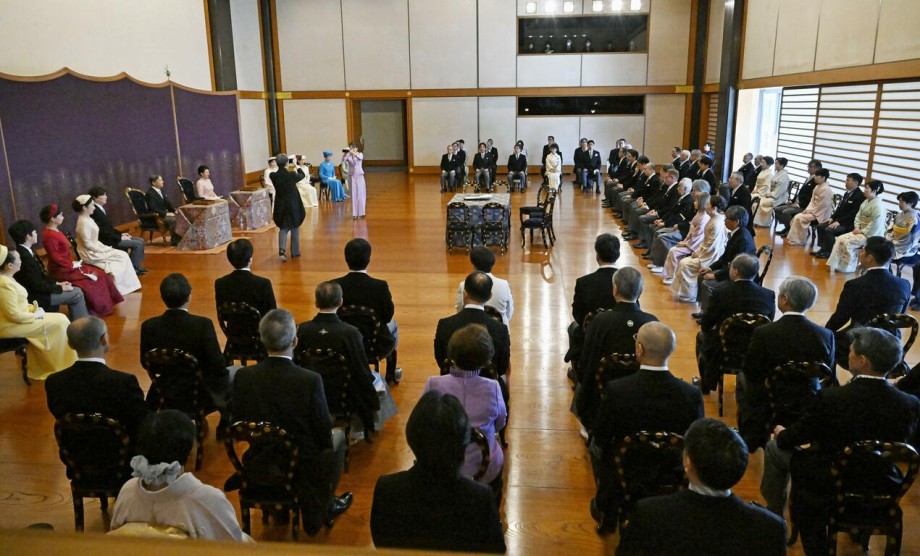
Japanese Emperor Naruhito expressed his hope for peace in Japan and the world in the new year in a poem recited at the annual New Year's Poetry Reading on Wednesday.
The emperor, who attended Shinto rituals at the Imperial Palace Sanctuaries before dawn on New Year's Day, put into verse how he was moved when he saw Venus shining brightly in the sky ahead of one of the proceedings.
The emperor and Empress Masako, together with their daughter Princess Aiko, attended the ceremony at the Imperial Palace along with Crown Prince Fumihito and his family, including Prince Hisahito, who joined the event for the first time after coming of age.
Members of the general public whose poems were selected were also present.
The theme of this year's poems at the reading was "mei," which primarily means "bright" or "light."
Peter MacMillan, a translator and a Japanese literature scholar who was born in Ireland, was invited by the emperor to present his poem, becoming the first foreign national to fill the role.
The official translation of the poem written by the emperor and provided by the Imperial Household Agency reads as follows:
Watching the morning star
Shining high in the sky
I pray sincerely for
Peace in the new year
Empress Masako's poem focused on the Tokyo Deaflympics, held in Japan for the first time in November.
The emperor, empress and princess attended a swimming event, with the family learning both Japanese and universal sign language to greet the athletes.
The official translation of the empress's poem reads as follows:
With medals around their necks
The athletes are beaming with joy
Using sign language
I convey to them
"Congratulations"
Princess Aiko wrote about her first official visit abroad to Laos in November last year, coinciding with the 70th anniversary of the establishment of diplomatic ties between Japan and the Southeast Asian country.
The bright and lively voices
Of the young Laotian students of Japanese
Fill the classroom cheerfully
The poems and compositions by other imperial family members, as well as 10 other pieces chosen from among 14,600 entries submitted by the public, were recited in the traditional style at the reading.
Waka poetry was developed by the court aristocracy in ancient Japan. A "tanka" poem, the most common form of waka, consists of 31 syllables in a pattern of 5-7-5-7-7.
- January 14, 2026
- Comment (0)
- Trackback(0)