
Loading

Search
▼ Areas In Japan With Few Public Transportation Increasing Nationwide Due To Population Decline, Ageing Society
- Category:Other
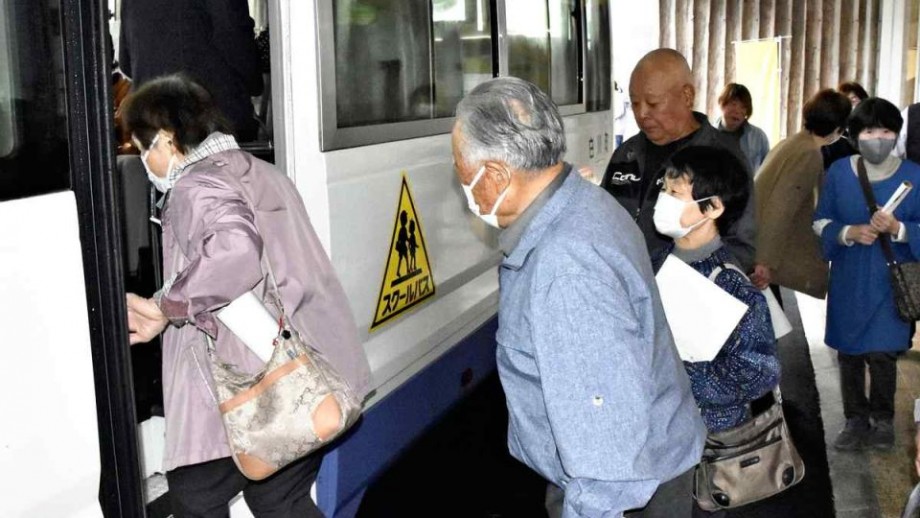
An increasing number of communities across Japan are facing the problem of so-called transportation deserts, or the difficulty of residents having access to buses and trains.
An increasing number of communities across Japan are facing the problem of so-called transportation deserts, or the difficulty of residents having access to buses and trains.
The central government is increasingly concerned that people without cars, such as students and the elderly, may lose their primary means of transportation.
With the goal of finding a solution, efforts are being made in some areas to make the most of limited transportation resources.
The Land, Infrastructure, Transport and Tourism Ministry has begun taking steps to address the problem. It has submitted a revision bill in the current Diet session aimed at realizing sustainable regional public transportation.
Supporting the town
The town of Shirakawa in Gifu Prefecture is facing accelerating population decline and aging. At JR Shirakawaguchi Station, located in the center of the town, high school students got off one after another from a large vehicle marked “school bus” and entered the station on the morning of April 10, when the new school term began.
“Thanks to the bus, I can get to school without asking my family to drive me 30 minutes to the station,” said a16-year-old student, who attends a high school outside the town.
The same vehicle then serves as a bus to ferry elementary school students to school. During the day, it is used by locals such as the elderly to go shopping, among other purposes.
“I broke my leg and cannot drive anymore,” said an resident, 89, who rode the bus to a hospital. “However, thanks to the bus, I can go shopping on my own.”
Shirakawa supports the daily lives of its residents via a town-operated transportation system, which allows people to use school buses and other vehicles for a fee, such as ¥200 per ride. The town has a contract with an organization to supply drivers.
This initiative began about 10 years ago when a local bus company reduced its route services. In the 2025 fiscal year, about 56,000 people, about nine times the town’s population of 6,641 as of April, used the service.
This fiscal year, the town is considering conducting a pilot program for individual transportation services using school buses and other vehicles.
A town official expressed confidence in the initiative. “Many families decided to leave the town when their children entered school. Thanks to the improved transportation network, such cases are decreasing,” the official said.
Over 2,000 areas nationwide
A nationwide survey by the transport ministry showed that using pubic transportation was difficult in more than 2,000 areas in the country as of the end of the 2024 fiscal year.
The ministry is paying close attention to Shirakawa’s initiative as a model for addressing the problem of transportation deserts.
The increase in the number of transportation deserts is driven by factors such as deteriorating financial conditions and a shortage of personnel among transportation operators due to population decline and the aging society.
The number of bus drivers decreased by about 19,000 between fiscal years 2016 and 2023, according to the transport ministry.
In addition, about 15,000 kilometers of bus routes and over 500 kilometers of rail lines were discontinued between fiscal years 2016 and 2024. In such areas, family members are forced to drive children and the elderly to and from destinations, placing a heavy burden on them.
Sustainable transportation needed
Transportation deserts are a problem that furthers depopulation in communities. The transport ministry has designated fiscal years 2025 to 2027 as a period for taking concerted efforts to tackle the situation.
It determined that it will be effective to fully utilize regional transportation resources in ways such as that seen in Shirakawa.
Given the situation, the ministry has submitted a bill to amend the Law on Revitalization and Rehabilitation of Local Public Transportation Systems to simplify procedures for local governments to coordinate with bus operators, schools and business to secure vehicles and drivers and establish transportation services.
“We’d like to support the establishment of sustainable regional transportation,” said a senior transport ministry official.
- May 5, 2026
- Comment (0)
- Trackback(0)