

▼ Do You Really Need To Learn Japanese To Live In Japan?
- Category:Experience

In late April, the New York Times Books section posted a tweet that set off a firestorm of debate and condemnation about whether or not a long-term foreign resident of Japan should actually have to learn Japanese if they live in the country.
The tweet in question linked to a review in the New York Times of Pico Iyer's new book, Autumn Light. Iyer is a well-known essayist and travel writer who has lived in Japan off-and-on for the past twenty-five years.
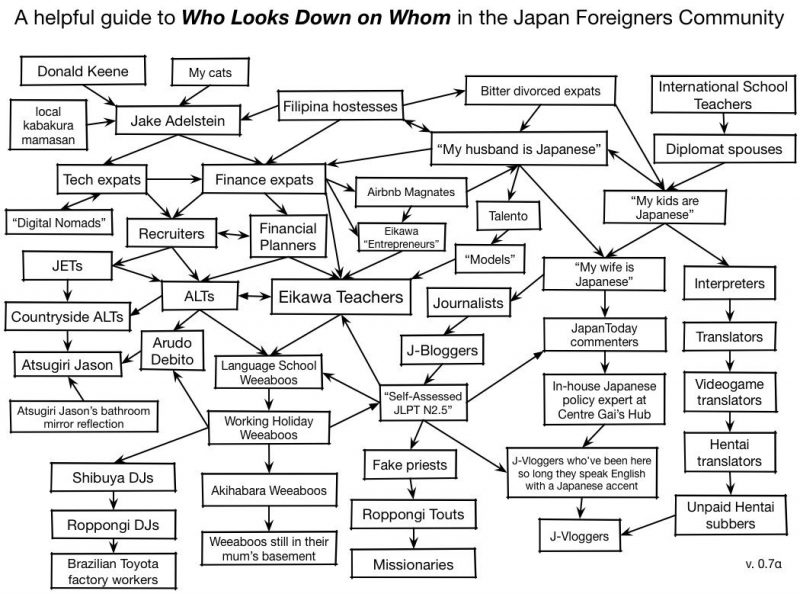
The debate touched on matters such as Orientalism and how Japan has traditionally been portrayed by Western writers, the status of women in intercultural marriages and the unpaid labour that foreign-born men often rely on simply in order to function from day to day in Japan, and the hierarchy that exists in the foreigner community in Japan.
According to Iyer's publisher, the new book is intended to be “a far-reaching exploration of Japanese history and culture and a moving meditation on impermanence, mortality, and grief.”
It's unlikely that many people on Twitter actually read handthe New York Times review of Iyer's book. Most of the 290-some-odd replies to the original tweet, as well as a number of conversations among “foreign-residents-of-Japan Twitter” focused on Iyer's never having learned to speak Japanese despite having lived in the country for a long, long time.
Others commented on the anonymity of Iyer's “Japanese wife” who, presumably makes sure Iyer can live his life easily in Japan.
As an on-and-off foreign resident of Japan who has invested a significant amount of time learning Japanese and just trying to fit in, I was irritated by the New York Times Books tweet as well. I left a few comments on Twitter expressing my own disgust with Iyer's supposed attitudes about Japan, although I generally refrain from criticizing fellow writers and residents of Japan in public.
The community of long-term foreign residents in Japan active on social media is pretty small, and the number of foreign residents writing about the country is smaller still. A disparaging remark can set up a social media feud that never ends.
On top of that, there is a small but significant number of long-term foreign residents of Japan (some of whom have naturalized and have become Japanese citizens) who stalk and harass journalists, academics and other writers who have the “wrong” opinions about Japan. It's a toxic culture that I've experienced first-hand writing about Japan at Global Voices, and that I don't want to participate in.
And yet still I left comments here and there expressing my irritation with Pico Iyer.
Why does Pico Iyer's refusal to learn Japanese inspire such vitriol? One reason could be that almost every non-Japanese Westerner who spends time in Japan feels both a sense of accomplishment for mastering simple tasks such as reading a train timetable or ordering from a restaurant menu, and a sense of disdain for other foreign visitors or residents who have not.
Not every long-term foreign resident of Japan has the time and energy to master the Japanese language, which makes it easy for those of us who can speak and read Japanese to feel smugly superior (although, in the foreign hierarchy of Japan, there is always someone who has achieved an even higher mastery of Japanese than you, and who can therefore feel even more smugly superior).
It also takes a lot of time and effort for a Westerner to establish a life in Japan. Besides learning approximately 1,800 Chinese characters and mastering 10,000 words, foreign-born residents of Japan have to become near-experts on an almost infinite number of subjects, including etiquette, tax law, history, food, and the importance of always possessing a pocket handkerchief (public lavatories almost never have paper towels for drying one's’ hands).
Doing the hard work of fitting in and making a life in the country results in a sort of feeling of ownership of the country and the culture: “How would you know anything about Japan? You don't even know the rules that govern municipal election campaigning!” (This is a real criticism I actually received recently from another long-termer trying to put me in my place.)
There's also something protective about the “long-termer” reaction to how others write about Japan. Tired tropes regularly reported in Western media about how Japanese people are not having sex or how the destroyed nuclear power plants at Fukushima are poisoning the Pacific are almost obsessively derided and debunked on Twitter and Facebook.
Twitter user @deivudesu has parodied the complicated social hierarchy of foreigners in Japan in a widely-shared diagram that, in spite of being tongue-in-cheek, shows just how much status matters.
Yet the more hard-won the lessons we learn about the country, the more some of us realize how mundane life in Japan actually is. Specialty Kitkat chocolate bars, vending machines, Zen temples, and capsule hotels and trains that run on time are all just background noise and are totally unremarkable. Fax machines are actually still regularly used in many countries around the world, and not just in Japan. It's actually quite straightforward to take part in a supposedly insular culture.
Do you really need to learn Japanese to live in Japan? Like anything else in life, the correct answer to this question is entirely personal. At the end of the day, no matter where in the world you live, it's totally up to the individual whether life is mundane, rich with variety, or mysterious.
- May 7, 2019
- Comment (2507)
- Trackback(0)
Comment(s) Write comment
Honestly this kind of writing is why I still bother to read independent sites, and a look at <a href="http://goodsroutestore.shop" />goodsroutestore</a> extended that broader reflection, the few sites that justify continued attention to non algorithmic content are sites like this one and finding them periodically is enough to keep my reading habits oriented toward independent rather than aggregated content.
-
Antoniosmith Web Site
- June 26, 2026
Honestly enjoyed reading this more than I expected to when I first clicked through, and a stop at <a href="http://pearlcovecraftcollective.shop" />pearlcovecraftcollective</a> kept that pleasant surprise going, sometimes you stumble onto a site that just clicks with how you like to read and this is one of those for me right now today which is great.
-
Levicag Web Site
- June 26, 2026
Cuts through the usual marketing fluff that dominates this topic online, and a stop at <a href="http://forestcovecommerceatelier.shop" />forestcovecommerceatelier</a> kept the same clean approach going, this is the kind of writing that respects the reader's time rather than wasting it on repetitive setups before finally getting to the point at hand which is what most sites do.
-
Royevata Web Site
- June 26, 2026
Now noticing how rare it is to find a site that does not feel rushed, and a look at <a href="http://vyxbrisk.shop" />vyxbrisk</a> extended that calm pace, content produced without time pressure has a different quality than content shipped to meet a deadline and this site reads as written without urgency which produces a different and better experience for readers.
-
GlenCaurn Web Site
- June 26, 2026
If I had encountered this site five years ago I would have been telling everyone about it, and a look at <a href="http://idozix.shop" />idozix</a> extended that retrospective enthusiasm, the version of me who used to recommend favourite blogs frequently would have made sure friends knew about this one and that earlier enthusiasm is partially returning to me here.
-
Freddieexozy Web Site
- June 26, 2026
Liked the balance between depth and brevity, never too shallow and never too long, and a stop at <a href="http://jazfix.shop" />jazfix</a> kept the same balance going across the rest of the site, this is one of the harder skills in writing and the team here clearly has it figured out very well indeed across every page.
-
ErvinSmods Web Site
- June 26, 2026
Took a few notes from this post, the points are easy to remember without needing to come back and check, and a look at <a href="http://biabrook.shop" />biabrook</a> added a couple more, the kind of place that sticks in the memory long after the browser tab has been closed for the day which says a lot really.
-
KeaganPleft Web Site
- June 26, 2026
Reading this fit naturally into my afternoon walk because I was reading on my phone, and a stop at <a href="http://valecovemerchantgallery.shop" />valecovemerchantgallery</a> continued well in that walking format, content that survives mobile reading without becoming awkward is content with format flexibility and this site has clearly thought about how it reads across different devices today.
-
Gregorynal Web Site
- June 26, 2026
Probably the kind of site that should be more widely read than it appears to be, and a look at <a href="http://taupeswift.shop" />taupeswift</a> reinforced that quiet wish, the gap between a sites quality and its apparent reach is sometimes large and that gap exists for this site in a way that makes me want to mention it more.
-
KerryKnody Web Site
- June 26, 2026
Took me back a step or two on an assumption I had been making, and a stop at <a href="http://maplecrestcraftcollective.shop" />maplecrestcraftcollective</a> pushed that reconsideration further, writing that gently corrects the reader without being aggressive about it is a rare diplomatic skill and the team here clearly knows how to land critical points without turning readers off.
-
Brandontidly Web Site
- June 26, 2026
Will recommend this to a couple of friends who have been asking about this exact topic, and after <a href="http://tasseltract.shop" />tasseltract</a> I have even more reason to do so, the kind of site that earns word of mouth rather than chasing it through aggressive marketing or paid placements is always a treat to find online.
-
JackAerow Web Site
- June 26, 2026
Genuinely useful read, the points are practical and easy to apply right away, and a quick look at <a href="http://haclex.shop" />haclex</a> confirmed that this site is consistent in that approach, looking forward to digging through the rest of it when I get the chance to sit down properly later in the week or this weekend.
-
BertramFup Web Site
- June 25, 2026
Really liked the calm tone running through the post, no shouting and no urgency forced into the writing, and a look at <a href="http://digitalbuyarena.shop" />digitalbuyarena</a> kept that quiet confidence going, the kind of voice that makes the reader feel respected rather than yelled at which is depressingly common across most modern blog content these days.
-
Porterbus Web Site
- June 25, 2026
This one is staying open in a tab for the rest of the day so I can come back and re read certain parts, and a look at <a href="http://japarrow.shop" />japarrow</a> suggests I will be doing the same with a few more pages here too, this is going to be a deep dive over the coming hours.
-
Loganfer Web Site
- June 25, 2026
Brycebof Web Site- June 26, 2026